How to Recover Deleted Files on Mac After Emptied Trash Bin
How to Recover Deleted Files on Mac
- 1. To recover lost data on your Mac, download and install the Deep Data Recovery application from our website.
- 2. Connect Device to Your Mac.
- 3. Launch Qiling data recovery application.
- 4. Select the Drive To Be Scanned.
- 5. Undeletelost Mac Data.
- 6. Quick Scan for Deleted Files.
- 7. Deep Scan for Lost Data.
- 8. Select Your Deleted Files...
5 Tips to Recover Deleted Files on Mac Even Emptied Trash
If you've accidentally deleted an important file on your Mac, there are several ways to recover it. You can use Mac hard drive recovery software, undo options, time machine backup files, or terminal commands to retrieve the deleted file. If you've already emptied the Trash, these methods can still help you recover your deleted file.
- Method 1. Recover Deleted Files with Software
- Method 2. Restore Mac Trash Files via "Put Back" Option
- Method 3. Recover Deleted Files with Undo Options
- Method 4. Restore Files via Time Machine Backup
- Method 5. Retrieve Deleted Files with Terminal
Method 1. Recover Deleted Files on Mac Even Emptied Trash
Applies to macOS 10.9 ~ 10.15
Qiling Mac data recovery software is an ideal tool for Macintosh data recovery, offering the most effective method that supports macOS 10.9 ~ 10.15. The operation steps remain the same across different macOS versions, making it a user-friendly and straightforward option for recovering lost files.
Regardless of the reason for your data loss, whether it was corrupted data, accidental deletion, or unintended formatting, we can help you retrieve it. A Mac hard drive recovery program can potentially recover data from an emptied Trash, a formatted hard disk, a crashed operating system, and even a virus-infected Apple computer.
Steps to recover deleted files on Mac:
Step 1. Launch Deep Data Recovery on your PC, and click "Fast Scan" to begin the process.
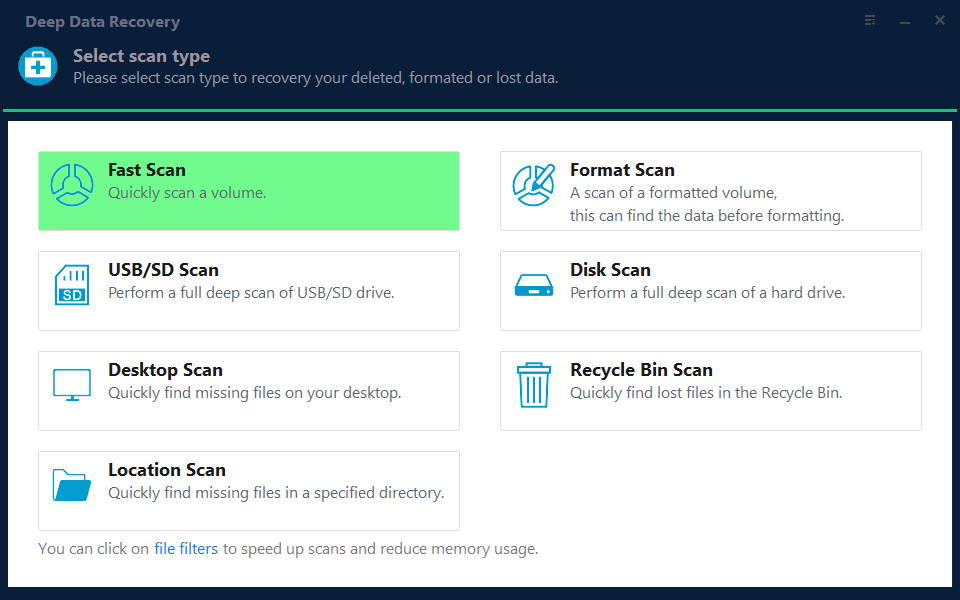
Note: You can choose different search modes based on where and why the data was lost.
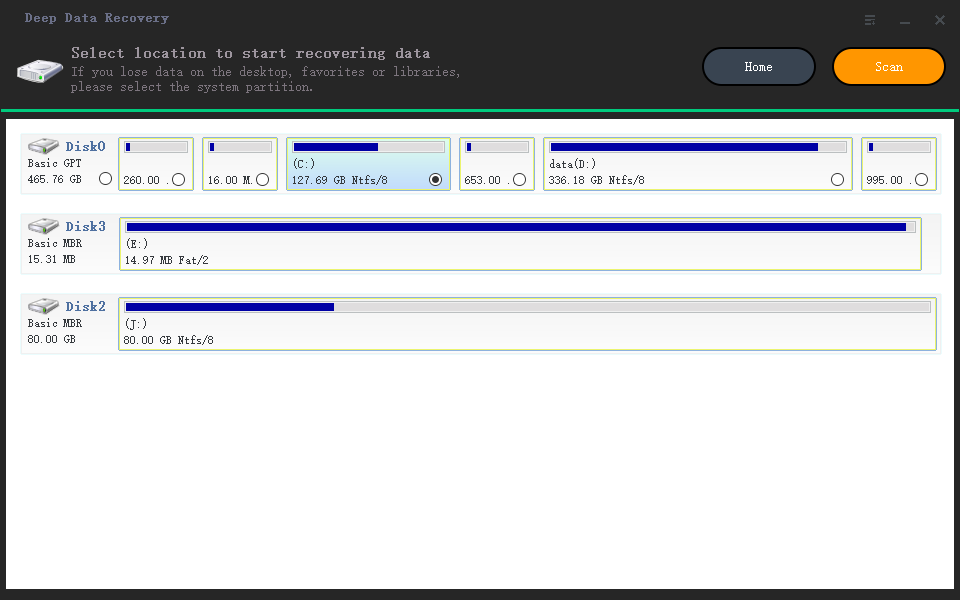
Step 2. Select the location where your important data & files were deleted and click the "Scan" button.
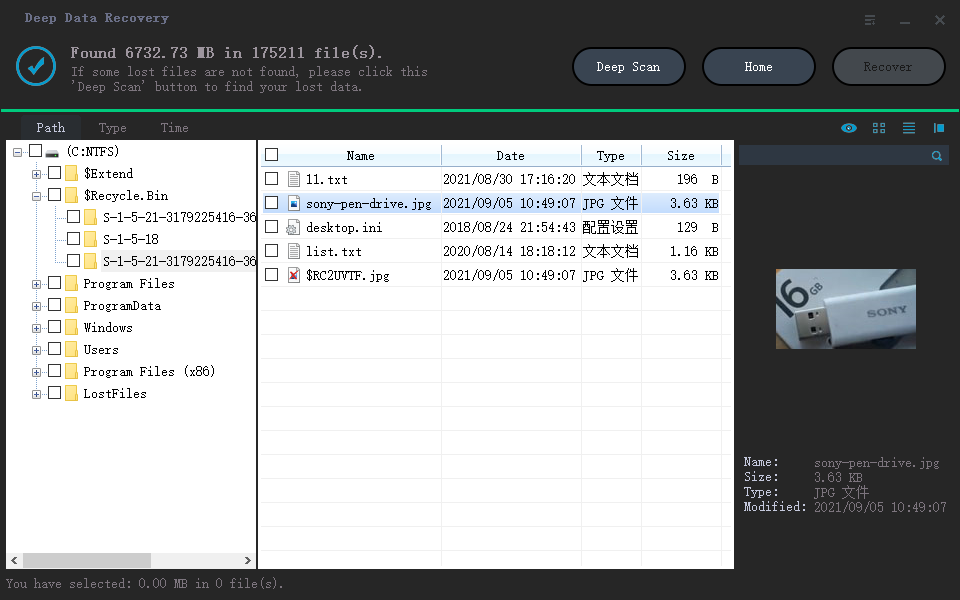
Step 3. The software will perform both a quick scan and a deep scan on the selected volume, working diligently to find as many deleted files as possible.
Step 4. The scan results will be displayed in the left pane. Simply select the desired file(s) and click the "Recover" button to retrieve them.
Here are the highlights of Mac file recovery software:
| Highlights | Details |
|---|---|
| File recovery from almost any storage device |
|
| Recovery for almost all file systems and types |
|
| Free scanning and previewing of files |
|
Also Read:How to Recover Deleted Files from Windows 10/8.1/8/7
If you've accidentally deleted files on your Mac, there are practical solutions to recover them without using third-party software. You can recover deleted files by checking the Trash folder, which stores deleted files for a short period. To do this, simply open the Trash folder, select the files you want to recover, and click "Put Back" to restore them to their original location.
Method 2. Restore Deleted Files on Mac from Trash via "Put Back"
If you've recently deleted a file on your Mac and haven't emptied the Trash yet, you can quickly restore it. Simply go to the Trash, right-click on the file you want to restore, and select "Put Back" - this will return the file to its original location. Alternatively, you can also drag the file back to its original location on the desktop or in a folder.
Step 1.Open the Trash Bin icon on your desktop, where all deleted files are stored.
Step 2.To recover deleted files on a Mac, simply find the files you want to recover, either by dragging them to the desktop or by right-clicking on them and selecting the "put back" option from the Trash, which will return the files to their original location.
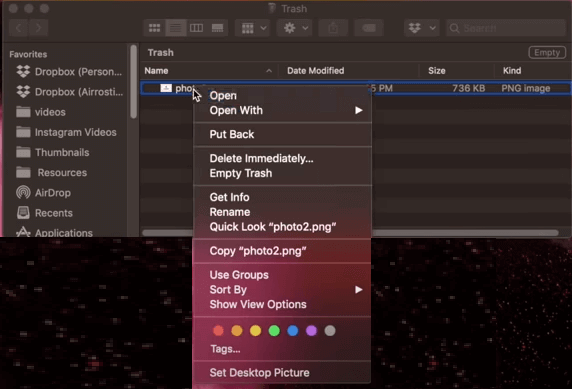
You can check the restored files on your Mac desktop.
Also Read: How to Recover Files Deleted from Windows Recycle Bin
Method 3. Recovering Deleted Files on Mac with the Undo Options
If you accidentally deleted important files on your Mac, you can usually recover them by using the "Undo" option, but you must do this immediately after deleting the files. Waiting until you empty the Trash or permanently delete files makes it impossible to recover them.
Step 1.To undo the deletion of files, go to "Edit" and select the "Undo Move" option.
Step 2.To undo the delete operation, press the command + Z key.
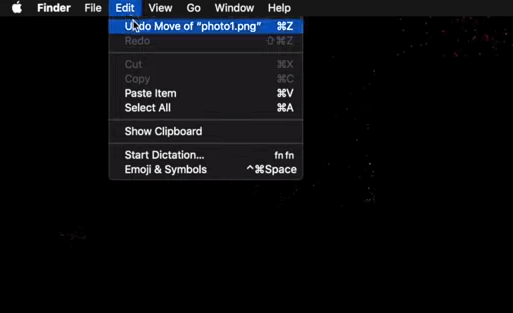
After the process, you can recover lost files on a Mac.
Method 4. Restore Deleted Mac Files via Time Machine Backup
Time Machine allows you to recover deleted data on your Mac from a recent backup, even if you've emptied the trash bin. However, if you haven't created a backup before, this method won't work. If you need to recover emptied Trash without a backup, you can refer to Method 1.
Applies to macOS High Sierra ~ macOS Catalina
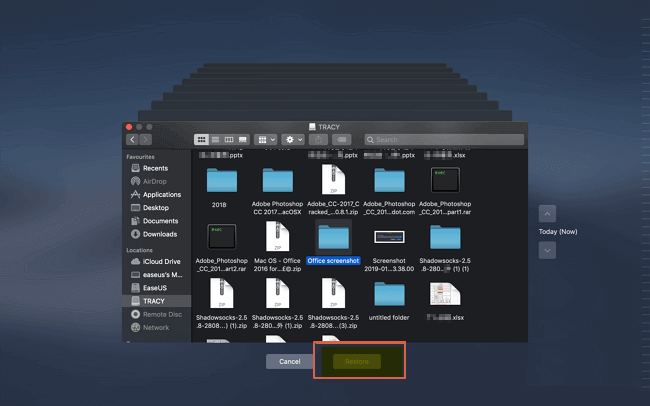
Step 1.To access Time Machine on your Mac, launch the application by clicking on the icon in the menu bar and selecting "Enter Time Machine" or by searching for Time Machine using Spotlight.
Step 2. To restore a file, locate it using the onscreen up and down arrows, and then press the Space Bar to preview it.
Step 3. To restore a deleted file, click the "Restore" button after selecting the file from the list of deleted items. This will return the file to its original location.
Method 5. Retrieving Deleted Files on Mac Through Terminal
To recover deleted files on a Mac without software, using Terminal is a viable option. However, it's essential to note that Terminal commands can only recover files from the Trash, and if the Trash is empty, you may need to use a Mac file recovery tool to retrieve your lost files.
To restore deleted files on Mac via Terminal, follow these steps:
Step 1.Go to "Finder" > "Applications" > "Utilities" and double-click "Terminal".
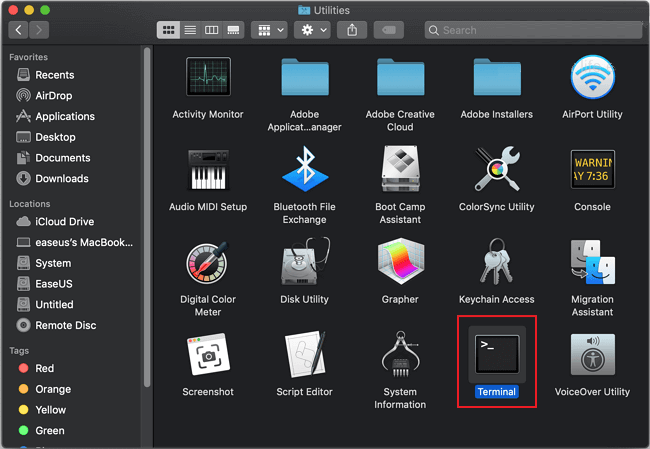
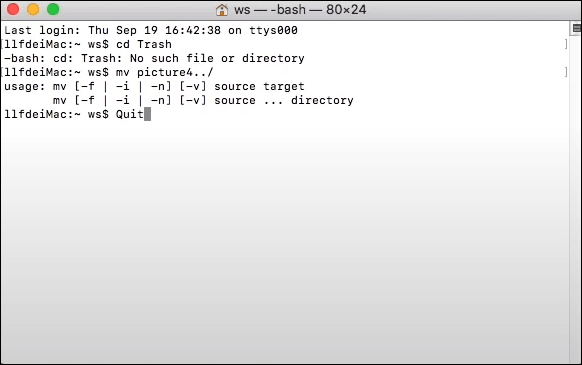
Step 2.To restore a deleted file from Trash, type cd .Trash and press the "Return" key to open the Trash folder in Terminal.
Step 3.Type mv filename ../, replacing "filename" with the name of the deleted file, and press Return. This command moves the file out of the Trash folder.
Step 4.Type "Quit" in the Terminal to exit the Terminal window.
You can easily recover lost data and access it again by using the software. This allows you to restore any information that you may have accidentally deleted or lost due to other reasons.
Common Reasons Leading to Mac Data Loss or Deletion
The most typical ways to delete files/folders on a Mac include deleting them directly, emptying the Trash, or using the "Secure Empty Trash" feature. However, even if these items are no longer in the Trash, they can still be recovered using professional Mac data recovery software.
- Directly drag files to the Trash and restart the computer.
- Regularly empty the Trash to remove deleted files for good.
- You can permanently delete files on a Mac by using the "Option + Command + Delete" hotkeys. This will bypass the Trash and delete the file directly.
- To delete files, click on the Finder menu and select "Empty Trash...".
- On new macOS, you can bypass the Trash by clicking "Delete Immediately" from the File menu to delete files directly.
The image shows the power of software in helping to recover lost data, making it a great encouragement for those who have experienced data loss.
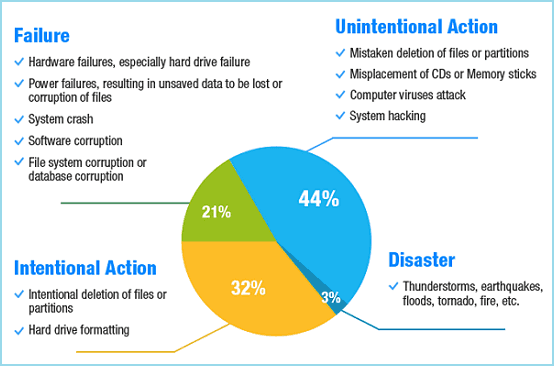
Why Is It Possible to Recover Deleted Files Mac
When you delete a file, you're not actually deleting the data itself, but rather the entry that points to where the data is stored. As a result, the space occupied by the deleted file is marked as "available" for new data to be written, making it possible for data recovery software to locate and retrieve the original files.
Once new data occupies the marked area for "available", it becomes increasingly difficult for any software to retrieve replaced and overwritten files. The sooner you find data recovery solutions, the more deleted files you can recover.
Additional Help for Mac Data Protection
Creating a regular backup is a simple yet effective way to prevent data loss due to unexpected causes. macOS's built-in Time Machine utility is a great tool that can handle backups automatically, making it a convenient option for users.
To back up Mac data with Time Machine
Step 1.Connect an external hard drive to your computer or MacBook
Step 2.To access the Time Machine backup settings, go to System Preferences, then click on Time Machine, and finally select the backup disk.
Step 3.Save the Time Machine backup files to a designated location by selecting it and clicking "Use disk".
Step 4.To set Time Machine to back up your Mac automatically, tick the "Back Up Automatically" option. This will ensure that your Mac's contents are regularly backed up.
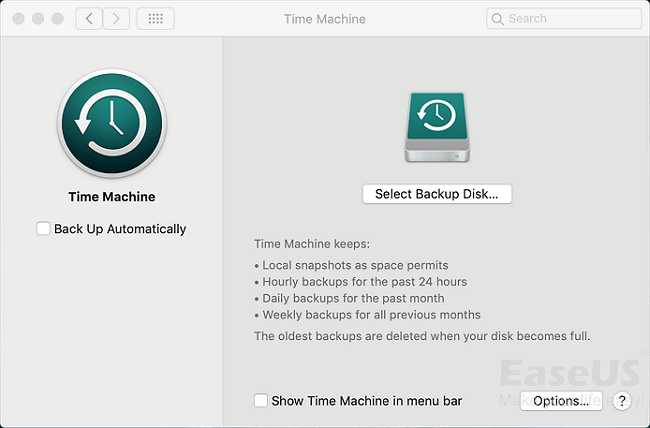
If you don't want to use the Time Machine, you can use a reliable Mac data backup tool, which allows you to back up your data in full, incremental, or differential modes.
Also Read:How to Backup Mac without Time Machine
Conclusion
If you've deleted files on your Mac and don't have a backup, there are still ways to recover them. You can follow specific steps to retrieve deleted files from any macOS version, or use other methods to get back files before emptying the Trash Bin. Alternatively, if you have a backup, you can restore your Mac data using Time Machine.
Sharing is caring. Help more people in need of getting deleted files back
You can easily undelete files and folders from the emptied Trash on your Mac using a deleted recovery tool. This all-in-one solution is especially helpful when you accidentally delete important data from an internal hard drive, USB flash drive, memory card, or pen drive. With this tool, you can regain access to your lost files and share your relief with others who may be experiencing similar issues.
Mac Data Recovery Frequently Asked Questions
After Mac data recovery, you can read these frequently asked questions to get additional help.
1. Is it possible to recover deleted files on Mac?
You can recover deleted files on a Mac, and it's often a straightforward process. If you've simply moved files to the Trash, you can easily restore them from there. If you've emptied the Trash, you can still recover deleted files using a Time Machine backup, undo options, or terminal commands.
To recover deleted files on Mac with software:
Step 1.To recover deleted data on a Mac, download and launch Qiling Mac data recovery software, select the location where your data or files were deleted, and click the Scan button.
Step 2. The software will perform both a quick scan and a deep scan, making a concerted effort to locate deleted files.
Step 3.Select the files you want to recover and click the "Recover Now" button to restore them.
2. How do I recover permanently deleted photos from my Mac?
Permanently deleted files on a Mac are not gone forever, as they can be recovered using secure methods, such as recovering deleted photos.
- Recover deleted photos in Photos App on Mac
- Recover deleted photos from Trash/emptied Trash
- Recover deleted photos from Time Machine backup
- You can recover deleted pictures and photos from your Mac using specialized Mac data recovery software. This software can scan your Mac's hard drive or storage device and retrieve deleted files, including photos and pictures, that were lost due to accidental deletion, formatting, or other reasons.
3. How can I recover permanently deleted files from Mac without the software?
Recover Deleted Files on Mac without Software:
Step 1.Launch Time Machine on your Mac.
Step 2.To recover deleted files, navigate to the desired file using the onscreen up-and-down arrows, and select it to restore.
Step 3.Click the Restore button to restore the deleted file to its original location.
4. Where do permanently deleted files go?
Files moved to the recycle bin or trash can remain in those folders until emptied, and can still be retrieved with the right software even after deletion.
Related Articles
- Deep Data Recovery for Mac Crack with Serial Key (v2.6) Latest22 Latest
- Mac Desktop Empty: How to Restore Missing/Disappeared Mac Desktop Files and Icons
- Follow Our Tips to Resolve A Collection of Mac No Startup Disk Issues
- What is Other on Mac Storage? Clear Other Storage Without Deleting Wrong Data
- Archive Recovery - Recover Deleted/Lost Zip and RAR Files
If you happen to delete or lost archive files, like .rar or .zip files. want to recover archive files? You can free try the archive recovery tool to recover Zip/RAR files on Windows or Mac within 3 steps. - How to Recover Files After Factory Reset/System Restore Windows 10
If you reinstall Windows 10, you risk losing some or all of your files, but there are ways to recover them. A factory reset or system restore can wipe out your data, but you can still retrieve your files using a guide that outlines the steps to take.
Products
Articles & Tutorials
- Data Recovery
- Data Backup
- File Recovery
- File Backup
- System Backup and Restore
- Disk and Partition Clone
- Technical articles
- Mobile articles
- Disk Master Help
- Windows Data Recovery Tutorials
- Windows Secure Delete Tutorials
- Windows Partition Management Tutorials
- Windows File Backup and Restore Tutorials
- Windows System Backup and Restore Tutorials
- Windows Disk Backup and Restore Tutorials
- Windows Clone Tutorials