Mini SD Card | What Is Mini SD Card, How to Format It
PAGE CONTENT:
- What Is a Mini SD Card
- Mini SD Card Adapter/Reader
- How to Format Mini SD Card on Windows 10
- How to Format Mini SD Card on Mac
- Mini SD Card VS Micro SD Card VS SD Card, What Are the Differences
What Is a Mini SD Card
The Mini SD card, a variant of the SD card, offers similar performance. It has a data transfer speed of 2MB per second and a hardware data write protection switch, preventing accidental deletion of stored content.
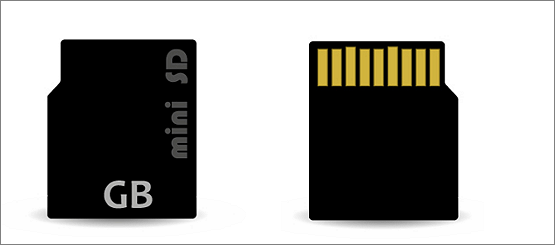
The features of the Mini SD card are:
- The Mini SD card is significantly smaller than a regular SD card, with a volume of 21.5×20x1.4mm, which is only 37% the size of a standard SD card.
- The mini SD card offers stable performance and can be used with a dedicated adapter card, making it fully compatible with a standard SD card slot.
- The design is more suitable for mobile communication equipment than SD cards due to its low power consumption.
What Is Mini SD Card Used for
A Mini SD card is a type of removable flash memory card that can be used in portable devices such as cameras or smartphones to store various types of files, including photos, videos, music, documents, or programs. It can be connected to a computer via a card reader, allowing for file transfer.
Mini SD Card Adapter/Reader
The Mini SD card was jointly developed by Panasonic and SanDisk. SanDisk introduced an SD card adapter or reader to make it easier for users to switch between different memory cards and use mini SD, which can be used with digital cameras, PDAs, and MP3 music players that currently use SD cards.
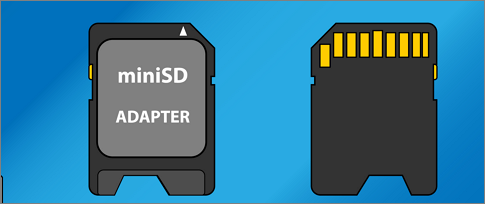
Mini SD card has the same read-This SD memory card offers high performance and large capacity, making it ideal for storing and transferring data. It is fully compatible with standard SD cards and can be used as a normal SD card through the included SD card adapter.
How to Format Mini SD Card on Windows 10
You can format a Mini SD card on Windows 10 using two easy methods. To do so, you can either use the built-in Disk Management tool or a third-party software like Qiling Partition Master.
Method 1. Format Mini SD Card with a Disk Management Tool
To securely format a Mini SD card on Windows 10, you can use Qiling Partition Master, a user-friendly and advanced disk management software that allows you to format the card securely.
EaseS Partition Master
- Transfer free disk space from one drive to another directly
- You can use the `convert` command in Windows to convert a logical partition to primary or primary partition to logical, FAT to NTFS partition, MBR disk to GPT, or GPT disk to MBR. The command syntax is `convert /fs:ntfs
` for converting FAT to NTFS, `convert /fs:fat32 ` for converting NTFS to FAT, `convert /fs:ntfs:larger-than-32gb ` for converting NTFS to larger-than-32GB, `convert /fs:ntfs:larger-than-64gb ` for converting NTFS to larger-than-64GB, `convert /fs:ntfs:larger-than-128gb ` for converting NTFS to larger-than-128GB, `convert /fs:ntfs:larger-than-256gb ` for converting NTFS to larger-than-256GB, `convert /fs:ntfs:larger-than-512gb ` for converting NTFS to larger-than-512GB, `convert /fs:ntfs:larger-than-1tb ` for converting NTFS to larger-than-1TB, `convert /fs:ntfs:larger-than-2tb ` for converting NTFS to larger-than-2TB, `convert /fs:ntfs:larger-than-4tb ` for converting NTFS to larger-than-4TB, `convert /fs:ntfs:larger-than-8tb ` for converting NTFS to larger-than-8TB, `convert /fs:ntfs:larger-than-16tb ` for converting NTFS to larger-than-16TB, `convert /fs:ntfs:larger-than-32tb ` for converting NTFS to larger-than-32TB, `convert /fs:ntfs:larger-than-64tb ` for converting NTFS to larger-than-64TB, `convert /fs:ntfs:larger-than-128tb ` for converting NTFS to larger-than-128TB, `convert /fs:ntfs:larger-than-256tb ` for converting NTFS to larger-than-256TB, `convert /fs:ntfs:larger - Resize/move, create, delete, format, wipe, and merge partitions
- Manage and organize your storage devices on Windows 10/8/7 with ease. This includes hard disk drives (HDD), solid state drives (SSD), USB flash drives, SD cards, pen drives, external hard drives, and more.
Free download this partition manager and follow the steps below to format the Mini SD card.
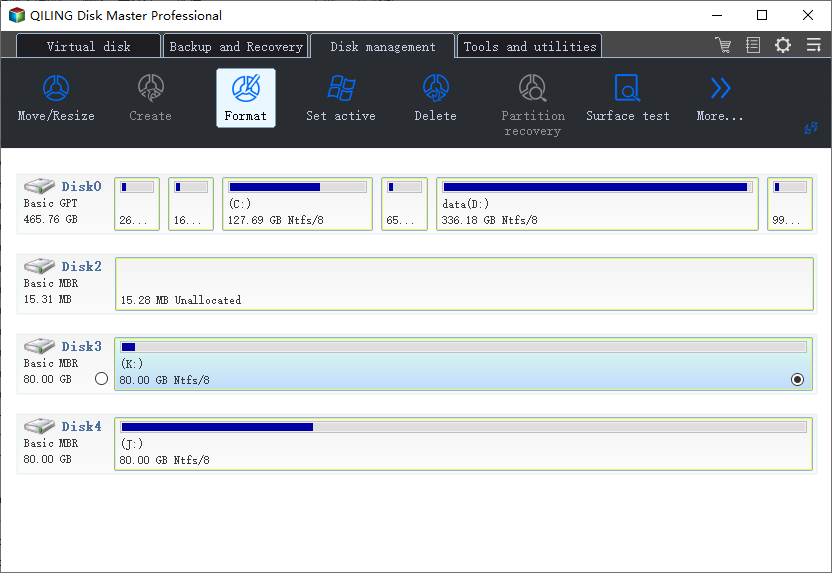
Step 1. To format your SD card, locate it on your computer, right-click on the partition you want to format, and select the "Format" option from the context menu.
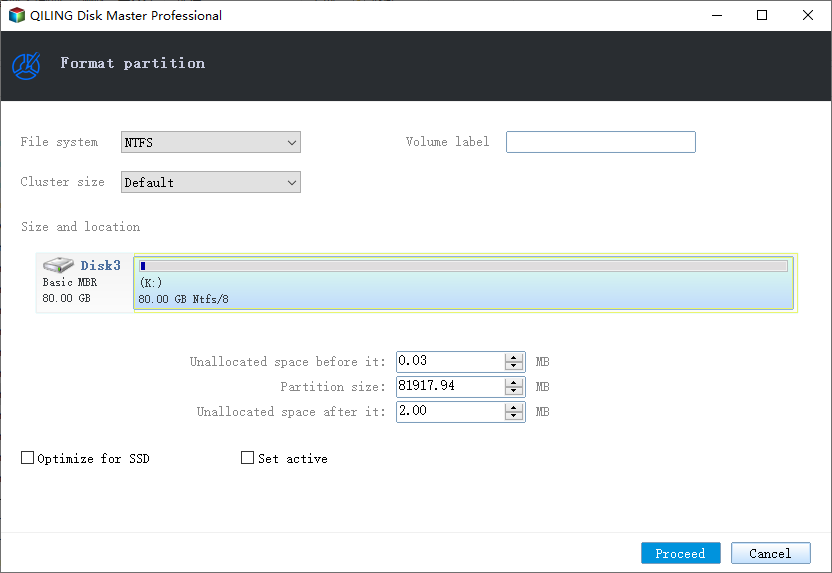
Step 2. Set a new partition label, file system (NTFS/FAT32/EXT2/EXT3/EXT4/exFAT), and cluster size to the selected partition, then click "Proceed".
Step 3. To start formatting your SD card, click "OK" on the pop-up window that appears. This will initiate the formatting process, allowing you to prepare the card for use with your device.
Method 2. Format Mini SD Card with a Disk Management Tool
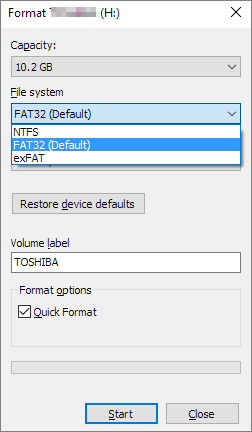
To format a Mini SD card with Windows File Explorer, follow these steps: first, insert the Mini SD card into your computer's card reader or a USB adapter; next, open Windows File Explorer and locate the Mini SD card under "This PC" or "Devices"; then, right-click on the Mini SD card and select "Format"; in the "Format" window, choose the file system (FAT32 or exFAT) and allocation unit size; finally, click "Start" to begin the formatting process.
Step 1. Connect the Mini SD card to your computer with an SD card adapter.
Step 2.To format your Mini SD card, press the Windows key + E keys to open Windows Explorer, right-click on your Mini SD card, and select the "Format" option. This will erase all data on the card and prepare it for reuse.
Step 3. To format your Mini SD card, specify the file system you want to use and set a new label for the card. This process involves clicking on the "Start" button to initiate the formatting and confirming with an "OK" to proceed.
How to Format Mini SD Card on Mac
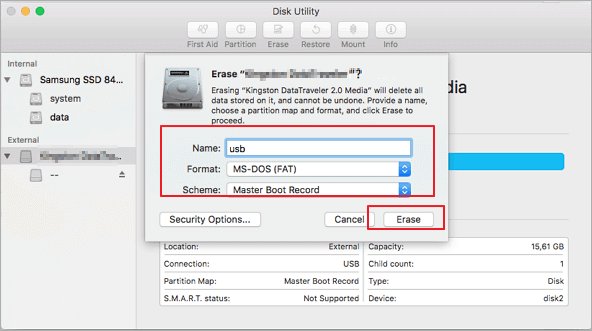
To format a Mini SD card on a Mac using Disk Utility, start by inserting the card into the SD card slot on the Mac. Next, open Disk Utility, which can be found in the Applications/Utilities folder or by searching for it in Spotlight.
Step 1. Connect your Mini SD card to your Mac using a Mini SD card reader.
Step 2. Run Disk Utility on your Mac.
Step 3. Select your Mini SD card. Choose "Erase" and then select "Format".
Step 4. If your Mini SD card is 32GB or larger, choose exFAT, otherwise choose FAT32.
Step 5. Click "Erase" when a pop-up message occurs.
Mini SD Card VS Micro SD Card VS SD Card, What Are the Differences
A Mini SD card and a Micro SD card are not the same, but they are both smaller versions of the regular SD card. A Mini SD card is a specific type of card that is smaller than a regular SD card, while a Micro SD card is a different type of card that is even smaller than a Mini SD card. They are both used in various devices such as cameras, GPS devices, and smartphones, but they have different capacities and uses.
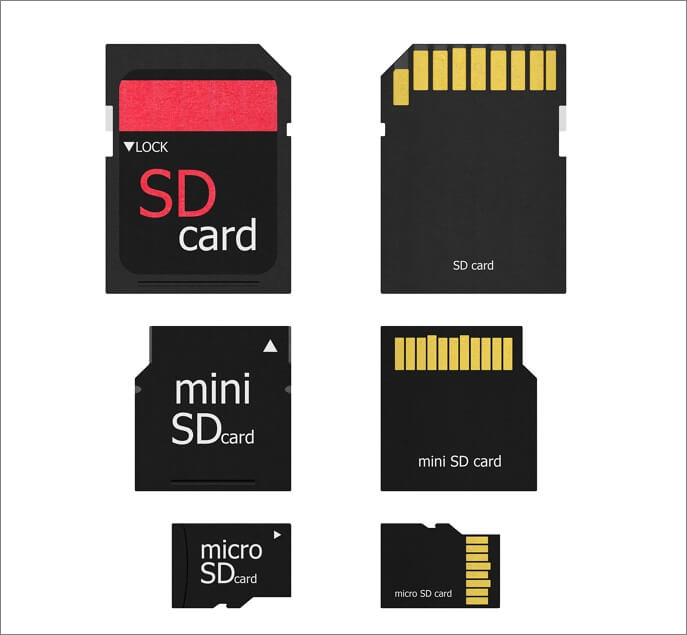
- Physical Size: SD cards come in different sizes, with standard SD cards being around 1.25 x 0.95 inches, Mini SD cards slightly smaller at 0.87 x 0.79 inches, and Micro SD cards the smallest at 0.43 x 0.59 inches. Both Mini and Micro SD cards can be used as SD cards with a reader or adapter, but the larger SD card won't fit into smaller slots.
- Storage Capacity: SD cards follow different standards, which dictate their maximum storage capacity. The original SD card standard allows a maximum of 2GB, while the SD high-capacity standard allows up to 32GB. The SD extended capacity standard, on the other hand, enables capacities between 32GB and 2TB. Additionally, SD cards and SDHC cards come in three sizes, but SDXC cards can only be used as full-size or Micro SD cards.
- File System: SD cards can support different file systems depending on their capacity, with some options including FAT16, FAT32, and exFAT. For SD cards with capacities under 32GB, FAT16 or FAT32 are suitable choices, while cards with capacities larger than 32GB can use exFAT.
- Cost: Smaller SD cards are often more expensive than larger ones, despite being physically smaller, due to higher manufacturing costs associated with higher precision requirements for smaller components. The cost difference is often more influenced by the card's class and type, such as the difference between a full-size Class 10 SDXC and a smaller Class 2 Micro SDHC card.
Mini SD Card Overview
There are three types of SD cards: SD card, Mini SD card, and Micro SD card (also known as TF card). Despite their different sizes, they are fully compatible with each other.
The Mini SD card is a compact and stable storage option that is widely used in the mobile phone market, supporting devices such as Motorola MPX100, Panasonic X700, and BQ S700. Its small size and relatively common availability make it a convenient choice, and it can even be used as a standard SD card through an expansion card.
Related Articles
- [2022 Fix] How to Activate Qiling Partition Master | Full Guide
- How to Remove Hard Drive from Computer [Full Guide]
- Solved 2022: Unable to Recover Your PC. The System is Too Small
- Initialize SSD/HDD for Free and Fix 'Disk Unknown Not Initialized' Error
- What Is the Easiest Way to Shred Files in Windows 10?
Are you concerned about data security? You can easily protect your sensitive information by securely shredding files on your Windows 10 computer. This simple method ensures that your confidential data is completely erased, leaving no chance of unauthorized access. - Solved: SSD Not Showing Up in Disk Management on Windows 10/11/8/7
Is SSD not showing up in Disk Management? this article provides four effective fixes and some quick fixes for this issue. Dive into this article now.
Products
Articles & Tutorials
- Data Recovery
- Data Backup
- File Recovery
- File Backup
- System Backup and Restore
- Disk and Partition Clone
- Technical articles
- Mobile articles
- Disk Master Help
- Windows Data Recovery Tutorials
- Windows Secure Delete Tutorials
- Windows Partition Management Tutorials
- Windows File Backup and Restore Tutorials
- Windows System Backup and Restore Tutorials
- Windows Disk Backup and Restore Tutorials
- Windows Clone Tutorials