(In-depth Tutorial) How to Format SSD in Windows 11
Solid State Drives (SSDs) differ from Hard Disk Drives (HDDs) in that they are flash storage devices, lacking mechanical parts. Unlike HDDs, SSDs don't require frequent formatting, but they do need to be formatted before initial use. This formatting process is necessary to clean bad sectors, erase any existing data, and prepare the drive for fresh usage.
Formatting SSDs is unnecessary because they use wear-leveling algorithms and controller firmware to automatically fix any data issues that may arise over time, making defragmentation also unnecessary.
Formatting an SSD can be a crucial step in preparing it for use, and there are multiple methods to do so. When the time comes, you'll need to format the SSD, and this post will guide you through various techniques to ensure it's done correctly.
Before formatting a drive, make sure to backup all the data on it, as formatting will permanently delete any data on the drive and it cannot be recovered.
Method 1. Using Qiling Partition Master to Format SSD
Method 2. Format SSD with Disk Management
Method 3. Format SSD via CMD
Method 1. Using Qiling Partition Master to Format SSD
Qiling Partition Master provides a safe and effective solution for disks and partitions, offering options to optimize, format, and secure drives, including scientifically formatting SSDs.
Here is the complete list of primary features:
- User-friendly interface
- Securely formats the drives
- Supports multiple File System
- Resize/Copy/Convert Disk Partitions.
- To transfer an operating system from a hard disk drive (HDD) to a solid-state drive (SSD), follow these steps:
- Convert Disk from MBR to GPT without formatting the disk
- Increase drive spaces on an installed OS
- Solve Windows partition issues
- Recover damaged or lost partitions
- Maximize disk capacity usage
- Reallocate disk space
Qiling Partition Master offers a comprehensive solution for disk management, allowing users to perform various tasks such as disk formatting, file system correction, and more, all without the need for a restart after most operations.
Step 1. Right-click the hard drive partition and choose the "Format" option.
Step 2. Create a new partition by setting the Partition label, File system, and Cluster size, then click "Proceed" in the new window.
Step 3. You can see a warning window, click "OK" to start formatting the hard drive partition. This will erase all data on the partition.
Method 2. Format SSD with Disk Management
Disk Management is a built-The Windows tool that can be used to format SSD drives is a crude tool that can result in accidental deletion of drives and partitions if not used properly. However, when used correctly, it allows users to format an SSD drive using various file systems such as NTFS, FAT, FAT32, and exFAT.
Step 1: To access the Disk Management tool, click on the Start Menu and type "Disk Partition" to bring up the Disk Management tool, then select it to launch. Once it opens, you can view all connected storage devices and partitions.
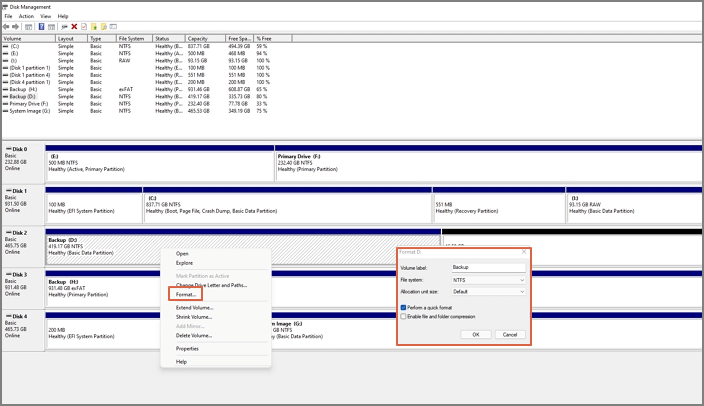
Step 2: To format the SSD using the Windows Disk Management tool, right-click on the SSD and select the option to format it.
Step 3: Choose the file system time, name the volume, and select the format type. If you want the system to erase data, uncheck the quick format, and let the wizard do its job.
You will need an administrator account to launch and use it.
Method 3. Format SSD via CMD
Be cautious when using the Command Prompt to delete files, as a small mistake can result in data loss. If you're comfortable with the Command Prompt, you can delete files quickly, but make sure to verify the drive name or use File Explorer before executing the command.
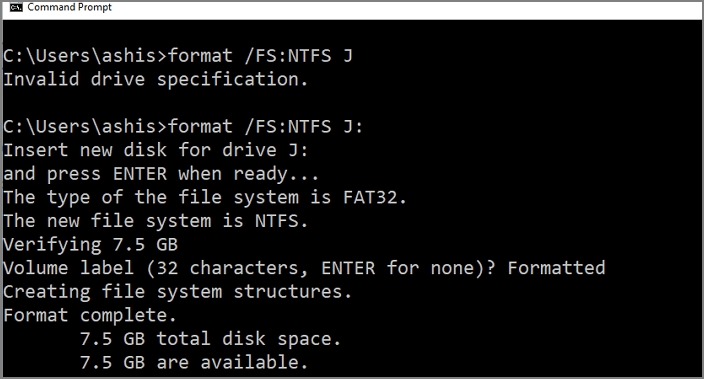
Step 1: To open the Run prompt with admin permission, press the WIN + R keys to open the Run dialog box, type CMD in the text field, and press Shift + Enter to run it with administrator privileges. This will launch the Command Prompt with elevated permissions.
Step 2: Once the command prompt opens, type "format /FS:NTFS" and press the Enter key.
Step 3: Once the process completes, the drive will be ready to use, and you should see that in the File Explorer.
The software is only suitable for professionals or internal use by IT admins due to the lack of a user interface.
Which Format Method Is Best?
The three methods of learning a new skill - self-study, online courses, and hands-on experience - each have their own advantages and disadvantages. Self-study allows for flexibility and self-paced learning, but may lack structure and accountability. Online courses provide a structured learning environment and often include interactive elements, but may not offer the same hands-on experience as actual practice.
| Comparison | Qiling Partition Master | Windows Disk Management | Command Prompt |
|---|---|---|---|
| Ease of Use | Most Easy | Cumbersome with no preview | No Interface, Difficult to use |
| Speed | Secure and Fast | Takes Time | Fast |
| MBR Table Corruption | Rebuild MBR Table | No such option | Available via Advanced Recovery |
| Data Protection | Enhanced | Absent | Absent |
The table provides a comprehensive view of the tools available, but there's more to it. Many of the built-in tools in Windows are designed for IT administrators who can utilize APIs and batch files to set up new computers and prepare systems for the future.
Most SSDs have an over-provisioning feature that should be set up after formatting. This increases the drive's lifespan and prevents slowing down as the disk space fills up, eliminating the need for defragmentation.
Conclusion
Formatting an SSD can be a crucial step in maintaining its security, and choosing the right method or tool is essential. Opting for a user-friendly software that provides a clear preview and offers customizable options is recommended. Qiling Partition Master is a suitable choice, as it simplifies disk management, allows for formatting partitions to any file system, and provides recovery tools.
Related Articles
- Format FS=NTFS Diskpart Has Encountered an Error
- [Solved] How to Fix 'Format FS=NTFS Take So Long'
- Should You Or Should You Not Defrag SSD (Windows 11 Support)
- Disk Read Only Fix: How to Change Drive from Read Only to Read Write (5 Ways)
- Top 9 Tips | How to Fix Steam Disk Write Error in Windows 10/8/7
If you receive the message “an error occurred while updating a game - disk read error” when using Steam, ! You'll find nine tried and tested fixes to resolve the issue, and Steam will not stop downloading files during the process. - 4 Easy Solutions to Fix 'Unable to Extend C Drive' in Windows 11
Are you Unable to Extend C Drive in Windows 11 and looking to fix your problem? Consider yourself lucky! Here, we have four excellent solutions that can help you do so. Read more.
Products
Articles & Tutorials
- Data Recovery
- Data Backup
- File Recovery
- File Backup
- System Backup and Restore
- Disk and Partition Clone
- Technical articles
- Mobile articles
- Disk Master Help
- Windows Data Recovery Tutorials
- Windows Secure Delete Tutorials
- Windows Partition Management Tutorials
- Windows File Backup and Restore Tutorials
- Windows System Backup and Restore Tutorials
- Windows Disk Backup and Restore Tutorials
- Windows Clone Tutorials