High-Level Format VS Low-Level Format, What's the Difference and How to Use [Full Guide]
When your hard drive is full, you may need to format or reformat it to free up space, or to change the file system format of a USB flash drive or external hard drive for gaming purposes.
The choice of formatting method depends on the situation, with high-level formatting and low-level formatting being two distinct options. High-level formatting involves using software to format data, such as formatting a document or spreadsheet, while low-level formatting refers to the physical preparation of storage devices, like formatting a hard drive or flash drive. Understanding the differences between these two methods can help you decide when to use each, ensuring you select the correct approach for your specific needs.
The terms "High-Level Format" and "Low-Level Format" are often used in the context of data storage and formatting. While they may seem similar, there's a key difference between them. High-Level Format refers to the logical organization and structure of data, such as the arrangement of files, folders, and metadata, which is typically handled by the operating system.
In this article, you'll learn:
- What Is High-Level Formatting?
- What Is Low-Level Formatting?
- High-Level Format VS Low-Level Format, What's the Difference?
- To perform a high-level format, you would typically use the built-in formatting tools provided by your operating system, such as Disk Cleanup or Disk Management in Windows, or Disk Utility in macOS. This process erases all data on the drive, including any operating system, programs, and personal files.
What Is High-Level Formatting?
- by Wikipedia The company's revenue growth has been impressive, with a 25% increase in sales over the past year. This significant growth can be attributed to the company's focus on innovation and customer satisfaction, as well as its strategic expansion into new markets.
High-level formatting, also known as HLF, is a type of logical formatting that sets up a new or used hard drive for Windows PCs and laptops with a new file system format, such as NTFS, FAT32, or exFAT. This process cleans up all existing data and recreates the data structure, allowing storage devices to safely save and store files on them.
What Is Low-Level Formatting?
For more background on low-level formatting, you can refer to Wikipedia
Definition: The Low-Level Formatting, also known as LLF, is a physical formatting process that marks cylinders and tracks of a hard drive as blank, then divides them into sectors with sector markers, effectively resetting a hard drive to its factory settings.
The differences between high-level and low-level formatting are what we will be discussing next. So, please continue reading to learn the details.
High-Level Format VS Low-Level Format, What's the Difference?
High-level and low-level formatting have distinct differences beyond their definitions. They differ in many aspects, including their approach to formatting, with high-level formatting focusing on the overall structure and design of a document, and low-level formatting focusing on the detailed arrangement of text and other elements. This difference in approach leads to distinct advantages and disadvantages for each type of formatting, making them suitable for different purposes and applications.
The main difference between High-Level Format (HLF) and Low-Level Format (LLF) is the level of detail and complexity involved in formatting data. High-Level Format is a more abstract and higher-level approach that focuses on organizing data into logical structures and relationships, while Low-Level Format is a more detailed and lower-level approach that deals with the physical storage and organization of data on a device. In other words, HLF is concerned with the overall architecture and design of a system, while LLF is concerned with the nitty-gritty details of how data is actually stored and retrieved.
| Differences | High-Level Formatting | Low-Level Formatting |
|---|---|---|
| Goal | Set up file systems like FAT32, NTFS, or exFAT, clean up hard drive partitions, and recreate file structure. | Recreate sectors and tracks on a disk, and physically clean up a disk to its original state. |
| Users |
|
|
| Data Recovery Possibility | Yes | No |
| Formatting Tools |
|
|
| Command | Format command | DM commands (different in diverse software or tools) |
The biggest differences between high-level and low-level formatting are clear. High-level formatting involves making overall decisions about the structure and organization of a document, such as creating headings, subheadings, and paragraphs, while low-level formatting focuses on the finer details, like font sizes, margins, and spacing. In essence, high-level formatting sets the overall tone and style of the document, whereas low-level formatting is concerned with the specific visual elements that bring the content to life.
- Goals: High-level formatting and low-level formatting are two different processes for resetting or setting up a drive. High-level formatting is used to reset a used drive or set up a new hard drive partition, whereas low-level formatting is used to reset a drive to its factory settings, essentially erasing the disk.
- Target Users: High-level formatting is suitable for most personal Windows users, whereas low-level formatting is mainly used by manufacturers and service providers.
- Unformat Recovery: After high-level formatting, you can use reliable data recovery software to unformat a drive and potentially recover your data. This process involves using specialized software to scan the drive and identify any remaining data, which can then be extracted and restored to its original state. By employing this method, you may be able to recover files and folders that were previously deleted or formatted, providing a second chance at salvaging your important data.
- Formatting Tools: Low-level formatting a disk or storage device requires professional third-party tools, which can be used in addition to Windows' built-in tools like Disk Management and Diskpart. These tools are necessary for executing high-level formatting tasks.
What does a low-High-level formatting, also known as logical formatting, is a process that reinitializes the file system and deletes all data on a hard drive or external storage device. It doesn't erase the physical data on the disk, but rather, it reorganizes the file system, making it unusable. On the other hand, low-level formatting, also known as physical formatting, is a process that erases the physical data on a hard drive or external storage device, reinitializing the disk to its factory settings. This process is usually performed by the manufacturer or a professional, as it requires specialized equipment and expertise. As a personal user, it's generally recommended to use high-level formatting for everyday use, as it's faster and safer.
When and How Do We Perform High-Level Format and Low-Level Format
Formatting is a process to prepare a hard disk drive for storing data. There are two types of formatting: high-level and low-level.
Let's get started here:
What Is the Difference Between High Level and Low-Level Format? [Pros & Cons]
The choice between high-level and low-level formats depends on several factors. High-level formats, such as JPEG and MP3, offer convenience and ease of use, but may sacrifice some quality and have limitations in terms of customization. On the other hand, low-level formats like RAW and WAV provide greater flexibility and control, but can be more complex and difficult to work with.
| Comparison | High-Level Formatting | Low-Level Formatting |
|---|---|---|
| Features |
|
|
| Pros |
|
|
| Cons |
|
|
The table shows that high-level formatting is faster than low-level formatting. Additionally, high-level and low-level formatting have different features and are intended for different purposes.
When to Use High-Level Format and When to Apply Low-Level Format
So when should I run high-When to format your hard drive? You should format your hard drive when you want to: **Install a new operating system**. If you're installing a new OS, you'll need to format your hard drive to get rid of the old one's files and settings.
When to Use High-Level Format:
- Windows warns you that you need to format the disk in drive H: before you can use it.
- A storage device such as a hard drive partition, USB drive, or SD card becomes inaccessible or displays a RAW file system, preventing data access or causing the device to be unreadable. This issue can occur due to various reasons, including file system corruption, power failures, or logical errors.
- Unlock a BitLocker partition without a password.
- You want to convert the file system format of a drive or USB pen drive to NTFS, FAT32, exFAT, or other formats.
- You can format a drive and remove all existing data at one time by using the built-in Disk Management tool in Windows or the Disk Utility app in macOS. To do this, open the Disk Management tool or Disk Utility app, select the drive you want to format, and follow the prompts to initialize and format the drive.
- To partition and format a new hard drive, follow these steps: Connect the new hard drive to your computer. Open the Disk Management tool (Windows key + R, type "diskmgmt.
When to Use Low-Level Format:
- The process of erasing a disk and setting its state back to the factory settings is called a "factory reset". It restores the disk to its original, out-of-the-box condition, deleting all data, settings, and applications.
- Fix bad sectors on a drive.
Warning: As low-Using level formatting on a hard disk drive can cause serious physical damage, making it highly recommended for Windows users, professionals, and disk repair service providers to avoid this method unless they are prepared to destroy all data on the disk.
How to Perform High-Level Format and Low-Level Format on Your Disk
So how do I perform a high-Formatting your hard drive can be done in two ways: high-level and low-level formatting. High-level formatting, also known as quick formatting, is a process that erases the file system and frees up space on your hard drive, but it doesn't overwrite the data on the drive. On the other hand, low-level formatting, also known as full formatting, is a more thorough process that completely erases all data on the drive by rewriting the drive's sectors.
To high-level format or low-level format a hard drive:
1. Select a tool that you think is the most convenient here to execute the high-level formatting.
The best hard drive format tools include high-level and low-level formatting software, such as Diskpart, and Qiling Partition Manager. These tools allow users to format their hard drives and partitions with various options and features.
- Qiling Partition Master Format Tool
- HP USB Disk Storage Format Tool
- HDD Low-Level Format Tool
- Windows File Explorer
- Windows Disk Management
- Windows Command Prompt (CMD)
2. To high-level format a drive or low-level format an external disk, you can use the built-in Disk Management tool on Windows, or the Disk Utility on macOS. On Windows, open the Disk Management tool by right-clicking on the Start menu, selecting "Disk Management", and then select the drive you want to format.
- To high-level (quick) format a hard drive partition for free, you can trust Qiling Partition Master or Windows Disk Management.
To format your hard drive partition with Qiling Partition Master quickly, follow these steps: First, launch the software and select the partition you want to format. Then, click on the "Format" button and choose the file system you want to use, such as NTFS or FAT32.
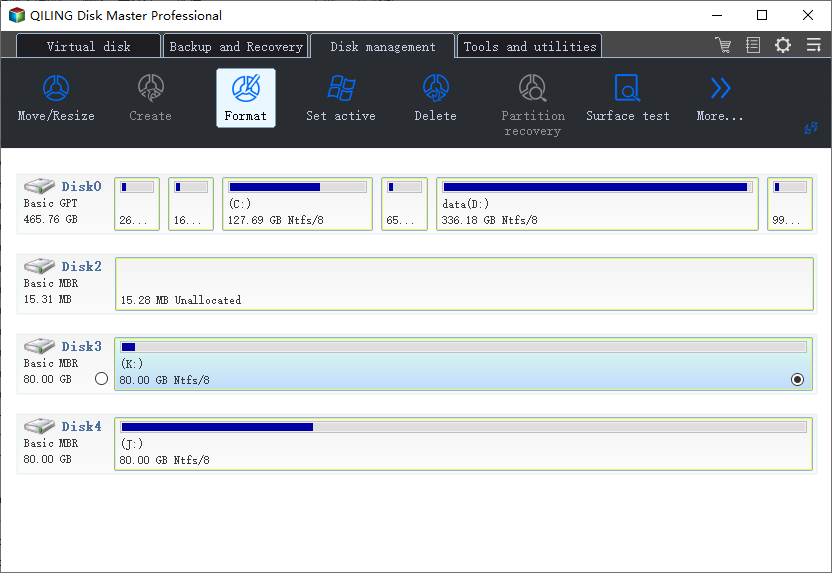
Step 1. Click the hard drive partition and choose the "Format" option.
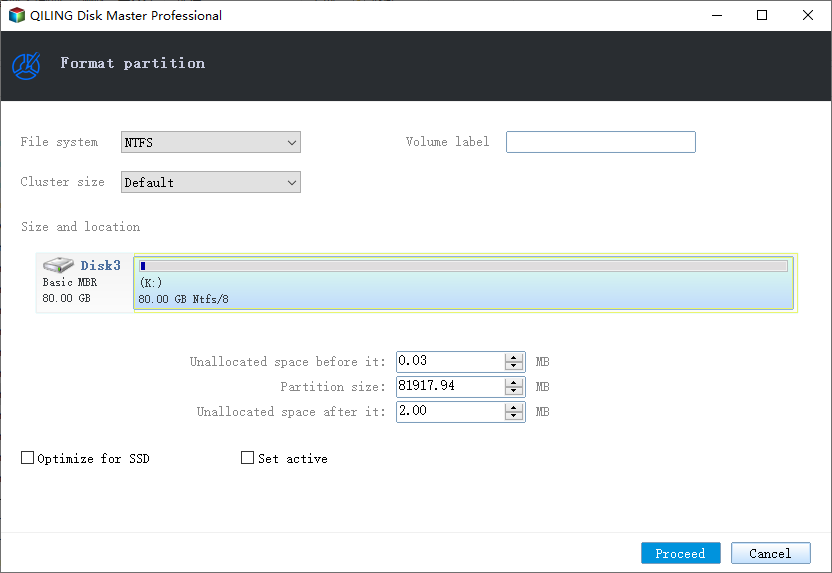
Step 2. Create a new partition by selecting the appropriate drive, setting the Partition label, File system, and Cluster size, and clicking "Proceed" in the new window.
Step 3. You'll see a warning window, click "OK" to proceed with formatting the hard drive partition.
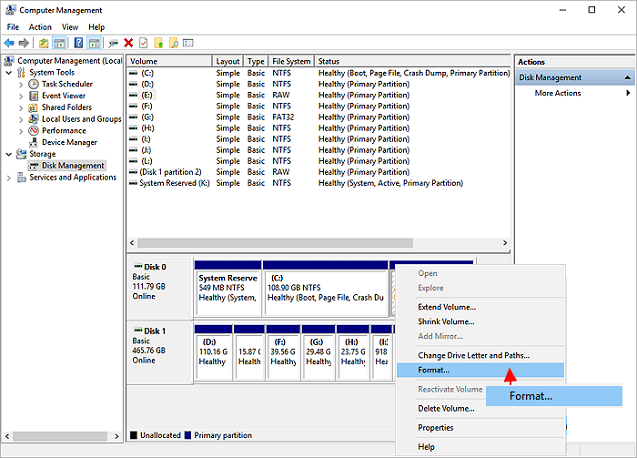
Format partition for free with Disk Management:
- Right-click "This PC" and choose "Manage".
- Go to "Disk Management".
- Right-click the target hard drive partition and choose "Format".
- Set the volume label and file system, then click "OK" to begin the formatting process for the drive.
- To low level format a drive in Windows 11/10, you can rely on HDD GURU - HDD Low-Level Format Tool or USB Low-Level Format.
See how to low-level format a hard drive partition with HDD GURU:
- Download and run HDD Low-Level Format Tool by Guru.
- To initiate the low-level format process, select the partition or drive you wish to format and click the "Continue" button.
- Go to the LOW-LEVEL Format tab and click "Format THIS DEVICE".
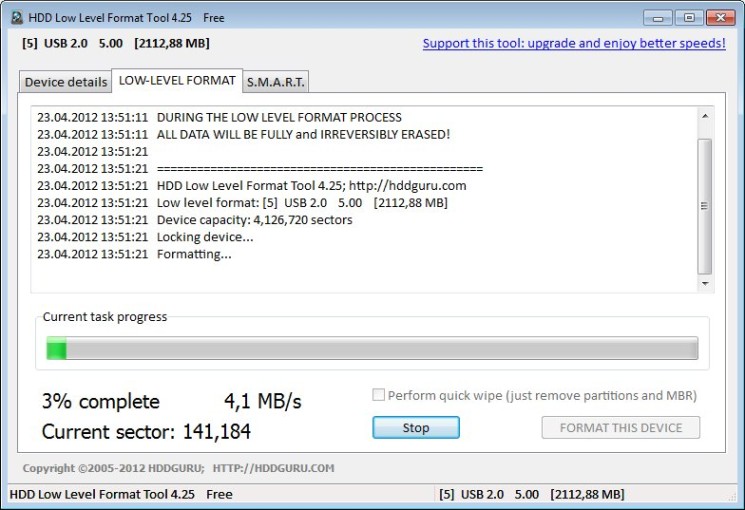
Wait for the process to complete.
High-Level Format Is Safer and More Practical for Ordinary Users to Protect Their Drives
On this page, we compared high-The distinction between high-level and low-level formats lies in their level of abstraction and complexity, with high-level formats being designed for human readability and ease of use, such as HTML and XML, which are used to structure and present data in a way that's easily understandable by humans, whereas low-level formats, like binary and ASCII, are more primitive and focused on raw data storage and transmission, requiring machine-specific interpretation and processing.
This page will help you understand the differences between two levels of formatting methods, making it easier to determine which method to apply when formatting a device.
When your drive is inaccessible or you need to change a drive format, you can use disk management, file explorer, or a third-party partition manager like Qiling Partition Master to easily format your drive.
When a disk contains too many bad sectors or needs to be reset, a low-level formatting tool can be used to help.
Related Articles
- Fix 'The Specified Disk Is Not Convertible' Error in Windows
- How to Decrypt and Format Encrypted SD Card [2022 Updated]
- Fixes for Windows Cannot Be Installed to Disk 0 Partition 1 Error
- Tutorial: Install Windows Server 2016 on Virtual Machine
- Is There Any Way to Copy Windows 10 Installation to New Hard Drive
If you are looking for effortless methods to copy Windows 10 installation to a new hard drive, this page covers a full guide on quickly transferring Windows 10 to another hard drive. - Is There Any Way to Fix Google Play Insufficient Storage Error
Have you ever encountered the Google Play insufficient storage error? This page explains how to fix Google Play's insufficient storage error in some reliable ways.
Products
Articles & Tutorials
- Data Recovery
- Data Backup
- File Recovery
- File Backup
- System Backup and Restore
- Disk and Partition Clone
- Technical articles
- Mobile articles
- Disk Master Help
- Windows Data Recovery Tutorials
- Windows Secure Delete Tutorials
- Windows Partition Management Tutorials
- Windows File Backup and Restore Tutorials
- Windows System Backup and Restore Tutorials
- Windows Disk Backup and Restore Tutorials
- Windows Clone Tutorials