Recycle Bin Windows 10 - Full Guide [with Pictures]
What Is Windows Recycle Bin
The Recycle Bin in Windows systems is a place to store files you no longer need, allowing you to restore them if accidentally deleted or if you change your mind about removing them. You can empty the Recycle Bin at any time to free up space, but doing so will permanently delete any files inside, so be sure to only empty it when you're certain you don't need to restore any of the deleted files.
Where Is the Recycle Bin in Windows 10
Windows 11 or Windows 10 has a Recycle Bin for recycling deleted files. It can be found in the same location as previous Windows versions, but may be tricky to locate for those unfamiliar with the operating system. To find it, simply look for the Recycle Bin icon on the desktop or in the Start menu. Alternatively, you can search for "Recycle Bin" in the search bar to quickly locate it.
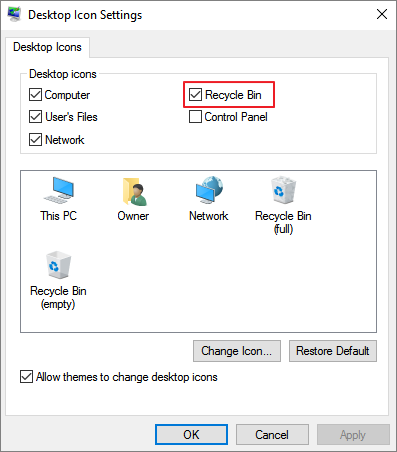
To get the Recycle Bin icon back on your desktop, right-click on the desktop, select "Personalize", then "Themes" and "Desktop icon settings". Check the box next to "Recycle Bin" and click "Apply" to save your changes. This will restore the Recycle Bin icon to your desktop.
Once you've opened the Recycle Bin, you can view all the files that have been deleted from your computer. To restore a file, simply select it and click "Restore", while selecting a file and clicking "Delete" will permanently remove it.
If you're having trouble finding the Recycle Bin through the Desktop properties option, don't worry, there are other ways to locate it. You can use the Run tool, PowerShell, or Settings to find the Recycle Bin.
Further Reading
To access the Recycle Bin in Windows 10, click on the Start button, then click on "File Explorer" or press the Windows key + E. In the File Explorer window, click on "This PC" or "Computer" in the left-hand menu, then double-click on the "Recycle Bin" icon.
Now that you know where to find the Recycle Bin in Windows 10, you can ensure that all your deleted files are appropriately recycled.
How to Manage Recycle Bin on Windows 10
Users can easily hide or remove the Recycle Bin from their Windows 10 desktop, either because they find it unsightly or want to declutter their desktop.
Hide/Remove Recycle Bin Step by Step
To hide the Recycle Bin in Windows 10, uncheck it in the Desktop Icon Settings. If you want to delete it completely, you'll need to edit the Registry.
Step 1. To fix the issue with the Taskbar not displaying on the left side of the screen, you can make a registry edit. Go to the Registry Editor, navigate to HKEY_LOCAL_MACHINE\SOFTWARE\Microsoft\Windows\CurrentVersion\Explorer, and create a new DWORD (32-bit) value named "ExplorerPinned" with the value 1.
Step 2. Right-click on the "Explorer" key in the registry and select "New > DWORD (32-bit) Value".
Step 3. To create a new value, double-click on it to open up its properties, then name this new value "NukeOnDelete".
Step 4. In the "Value data" field, change the value from "0" to "1" and click "OK". Close the Registry Editor and restart your computer for the changes to take effect.
- Warning
- Before making any changes to the Registry, it's recommended to back up the existing Registry by going to "File > Export" in the Registry Editor, to prevent any potential damage.
Click here to read the ultimate instructions on hiding/showing Recycle Bin in Windows 11/10.
Empty Recycle Bin in Windows 10 to Free Up Space
The Recycle Bin is a safety net for your files, but when you want to delete something permanently, you need to empty it.
To empty the Recycle Bin, simply open it, select the items you want to delete, and click "Delete" or select all items and click "Empty Recycle Bin" from the toolbar.
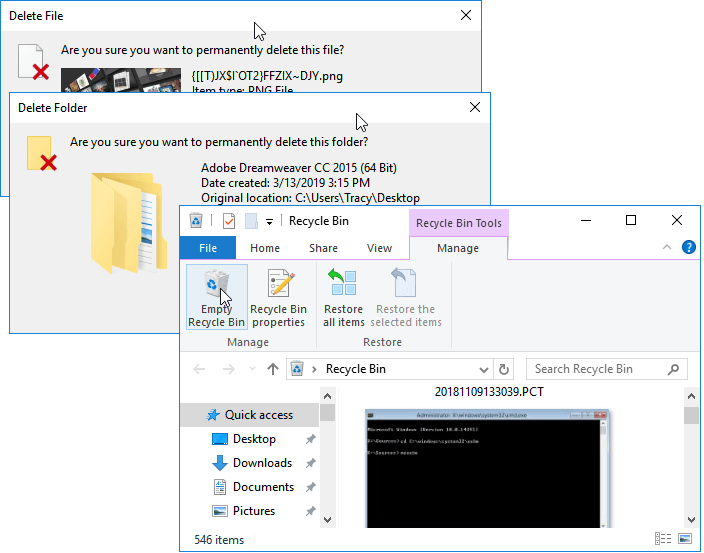
You'll be prompted to confirm the deletion of items in the Recycle Bin, after which they'll be permanently deleted and can't be restored. Be cautious, as emptying the Recycle Bin is irreversible. Make sure you don't need those files before proceeding.
Recycle Bin Corrupted/Not Working, How to Fix
When managing the Recycle Bin, issues may arise, such as it being unable to empty or being emptied incorrectly, or it crashing. If these problems occur, refer to this user manual for troubleshooting solutions.
Case 1. "Empty Recycle Bin" Is Greyed Out
Some users have reported that when they right-click on the Recycle Bin, the "Empty Recycle Bin" option is greyed out, even though the bin is full and not being emptied, despite having many files.
The issue of being unable to empty the Recycle Bin might be caused by not logging in with an admin account, a corrupted Recycle Bin, or a third-party program interfering. To fix this, try closing or uninstalling the running software, restarting your computer, or manually deleting the $recycle.bin folder.
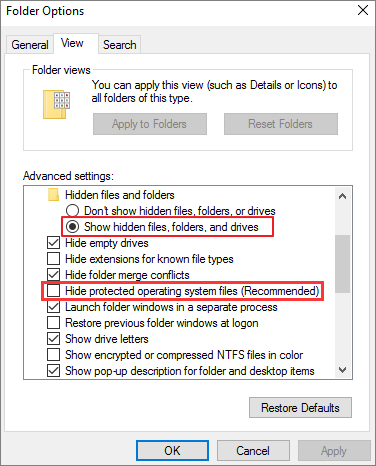
To show the $recycle.bin folder, open File Explorer, go to the view options, select "Show hidden files, folders, and drives", and uncheck "Hide protected operating system files" to view the folder containing deleted files.
After setting up the recycle bin, you can find it in the root directory of each volume, such as C:\$RECYCLE.BIN or D:\$RECYCLE.BIN. To empty the recycle bin, open the folder, select all files, and press the Delete key, confirming the deletion to permanently remove them from your hard drive.
Case 2. Windows 10 Recycle Bin Corrupted
The Recycle Bin can become corrupted, causing issues with deleting or restoring files, but it remains an essential tool for computer operation.
The Recycle Bin can become corrupted if you delete a large number of files at once or try to delete a protected file or folder, causing it to fill up and become unstable.
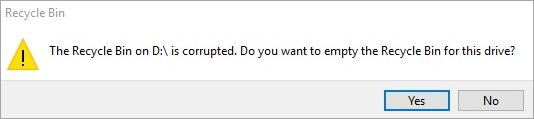
If your Recycle Bin is corrupted, you may encounter an error message when trying to delete files or folders, stating that "The Recycle Bin is corrupted" or "Windows can't empty the Recycle Bin". Don't worry, as this issue can be fixed with two full-around solutions.
Method 1. Fix Corrupted Recycle Bin with Command Prompt
To fix a corrupted Recycle Bin, you can use the Command Prompt. Open the Command Prompt and type in the command "cmd /k " and then "rd /s /q %systemroot%\system32\drivers\etc\recycle.bin" followed by "mkdir %systemroot%\system32\drivers\etc\recycle.bin" and finally "attrib +s +h %systemroot%\system32\drivers\etc\recycle.
rd /s /q C:\$Recycle.Bin
This will delete all of the files in the Recycle Bin, including any corrupt files. This should fix the problem and allow you to delete files or folders normally.
Method 2. Fix Recycle Bin Not Working Using Registry Editor
You can also fix a corrupted Recycle Bin by using the Windows Registry Editor. To do this, open the Registry Editor and navigate to HKEY_LOCAL_MACHINE\SOFTWARE\Microsoft\Windows\CurrentVersion\Explorer\RecycleBinFlags.
To resolve the issue, find the "GlobalSettings" value and change it from 1 to 0, which will reset the Recycle Bin.
You can try emptying the Recycle Bin manually to repair the corrupted Recycle Bin. For more information, check out our topic article on how to solve this problem.
Case 3. Mistakenly Empty Recycle Bin and Permanently Lost Data
You can recover deleted files by using a data recovery software, such as Deep Data Recovery or Qiling file recovery software, to scan your computer for deleted files and retrieve them. Alternatively, you can try using a file recovery service, which can scan your computer and retrieve deleted files for you. If you're feeling handy, you can also try using a USB drive to recover deleted files by connecting it to your computer and using a file recovery software to scan the drive for deleted files.
If you've accidentally deleted files, try using recycle bin recovery software, the Windows Previous Versions feature, the Windows backup and restore tool, or contacting a data recovery specialist if all else fails. This should help you recover your deleted files, even if the Recycle Bin has been emptied.
Read More
Read the in-To recover deleted files from the Recycle Bin in Windows 10, start by opening the Recycle Bin folder. If the files you want to recover are not visible, click on the "Restore" button at the top right corner of the window to show deleted items.
Tips for Making Good Use of Recycle Bin
The Recycle Bin can be a useful tool for cleaning up data and recovering deleted files. By utilizing it effectively, you can keep your data safe and avoid losing important information. Following some simple tips, such as regularly emptying the Recycle Bin and being mindful of what you delete, can help you make the most of this feature and prevent accidental data loss.
- Enable deletion confirmation to avoid accidentally removing needed files.
- Expanding the capacity of the Recycle Bin allows it to store more temporarily deleted data, giving you more chances to recover lost files.
- The Recycle Bin temporarily stores deleted files for up to 30 days, allowing you to adjust the expiration date to keep deleted data for a longer period.
- Regularly create full backups for your computer to minimize the risk of data loss.
Conclusion
The Recycle Bin in Windows 10 is a folder that stores deleted files, accessible by double-clicking its desktop icon, and can be emptied to remove all files, but individual files can be restored if needed.
If you accidentally delete a file from the Recycle Bin, you can use a software like Deep Data Recovery to recover your files.
Related Articles
- A Complete Guide to Recover Deleted Files
- Word Recovery for Unsaved, Deleted, and Corrupted Word Documents [Professional Guide]
- The Best Video Repair Tools You Must Know in 2022
- Flash Drive Data Recovery Software: Recover Files from a USB or Pen Drive
- How to Recover Unsaved & Deleted Word Documents
How to recover unsaved or deleted Word document in Windows 10, 11 or Mac? Please continue to see below and learn 10 easy ways for your Word document. - What Is I/O Device Error and How to Fix It on Windows
On this page, you can find to know what is I/O error and how to fix I/O device error on your Windows computer. Continue reading for further information about it.
Products
Articles & Tutorials
- Data Recovery
- Data Backup
- File Recovery
- File Backup
- System Backup and Restore
- Disk and Partition Clone
- Technical articles
- Mobile articles
- Disk Master Help
- Windows Data Recovery Tutorials
- Windows Secure Delete Tutorials
- Windows Partition Management Tutorials
- Windows File Backup and Restore Tutorials
- Windows System Backup and Restore Tutorials
- Windows Disk Backup and Restore Tutorials
- Windows Clone Tutorials