How to Convert a Shortcut File into Original File
If USB flash drive files have changed to shortcuts, you can troubleshoot by checking the drive's file system for corruption, running a virus scan, and ensuring the drive is properly ejected and reconnected. Additionally, try checking the drive's properties and looking for any signs of malware or other issues that might be causing the problem.
| Workable Solutions | Step-by-step Troubleshooting |
|---|---|
| Fix 1. Convert files with CMD | Press Windows + R and type cmd. Right-click the Command Prompt and choose "Run as administrator"...Full steps |
| Fix 2. Recover hidden files | Use Qiling hard drive recovery software to help you recover shortcut files. It can recover deleted...Full steps |
| Fix 3. Show hidden files | You can recover and open shortcut files by showing the hidden files. Open your USB Drive. Open Folder...Full steps |
How to Convert Shortcut Files into the Original File
"I use a USB flash drive as a backup device to store the crucial files and documents. This morning when I inserted the flash drive into my laptop and tried to open a file, to my huge surprise, all of my files in it turned into shortcuts with the same names as I saved earlier. I can't open any of the shortcut files. Does anyone know how to convert shortcut files into the original file? I need to recover the shortcut files."
Files turning into shortcuts is a common issue that affects many people, often caused by a virus, trojan, or worm that infects external storage devices like USB flash drives, SD cards, or external hard drives. The virus can hide files and folders, replacing them with small shortcut icons, and may also delete files, making it difficult to recover the original content.
If you're experiencing issues with opening and recovering shortcut files, you can try the following methods to troubleshoot the problem with ease.
How to Open and Convert Shortcut Files into Original
Here are three effective methods you can apply to solve the problem and try to recover shortcut files. Try them all until you can open shortcut files, as they may work differently depending on your specific situation.
Method 1. Convert Shortcut Files into Original Files by CMD
Step 1. Press Windows + R to open the Run dialog box, type "cmd" and press Enter. Right-click on the Command Prompt window and select "Run as administrator" from the context menu.
Step 2. This command uses the attrib command to remove the hidden, read-only, and system attributes from all files with the .lnk extension on the specified drive letter (e.g. e:), which is typically where shortcuts are stored.

You can also use these attrib command lines to open shortcut files on the pen drive with the same steps. Alternatively, if you need a visual guide, you can watch the YouTube video tutorial below.
The video demonstrates a method to recover files from devices such as hard drives, USB Flash Drives, memory cards, and pen drives that have been infected by shortcut files. By following the steps, you can refresh your pen drive and locate your files on it, making it easier to recover them.
Method 2. How to Recover Hidden/Deleted Files by the Shortcut Virus
If the above methods fail to show hidden files or if the original files have been deleted, you can use Qiling hard drive recovery software to recover shortcut files. This software can recover various types of files, including graphics, videos, audios, documents, emails, and more, within three steps.
Deep Data Recovery
- Recover lost or deleted files, documents, photos, audio, music, emails, and other digital data easily with specialized software or tools. These tools can scan your device's storage, identify and restore deleted files, and even recover data from corrupted or damaged storage devices.
- If you've accidentally formatted your hard drive, emptied your recycle bin, or lost files from a memory card, flash drive, digital camera, or camcorder, there is a solution, your files are not necessarily gone forever. There are various data recovery software and techniques that can help you recover your lost files, depending on the device and situation.
- Data recovery support is available for various scenarios, including sudden deletion, formatting, hard drive corruption, virus attacks, and system crashes, helping to retrieve lost information and recover from unexpected data loss events.
To open shortcut files effectively, download a free data recovery program and follow the step-by-step guides below.
Step 1. Choose file types and click "Fast Scan" to start
Run Qiling virus file recovery software on your Windows PC. Choose file types and click "Fast Scan" to start the recovery process.
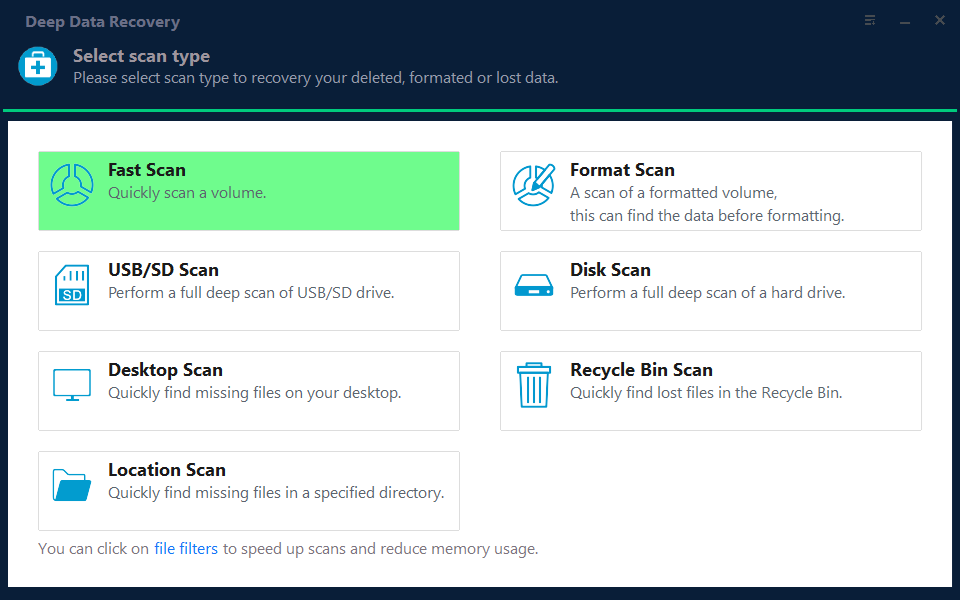
Note: You can choose different search modes based on where and why the data was lost.
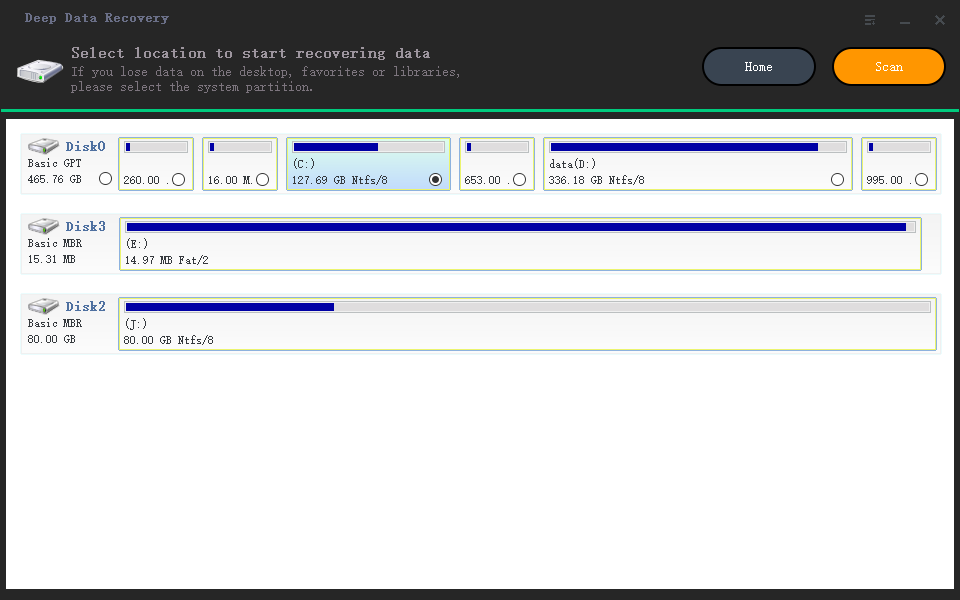
Step 2. Select the virus infected drive to scan
To scan the disk attacked by the virus for lost or hidden files, select the disk. Note that scanning may not be possible if the virus has caused significant damage or if the disk is severely corrupted. Additionally, scanning may not recover all files or may not be able to identify all hidden files.
- If a virus has hidden or deleted files on an HDD, it's best to install software on a separate volume or an external USB drive to prevent overwriting of existing data.
- If the infected device is an external hard drive, flash drive or memory card, it doesn't matter to install the software on the local drive of the computer.
Step 3. Check all scanned results
Deep Data Recovery will immediately start a scan process to find deleted or hidden files on the virus-infected hard drive. To quickly locate wanted files, you can use the Filter or type grouping feature to display only pictures, videos, documents, emails, etc.
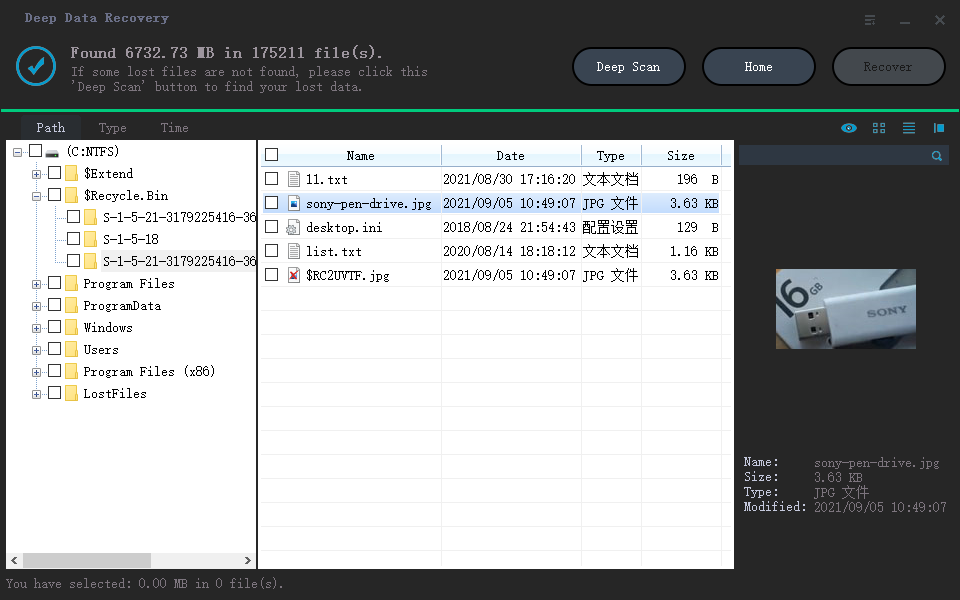
Step 4. Preview and recover deleted/hidden files
After the scanning process is complete, you can preview the recovered files. Select the files you want to recover and click the "Recover" button. Save the restored files to a secure location on your computer or storage device, avoiding the original location where they were lost.
Method 3. Show Hidden Files to Open Shortcut Files
The shortcut virus typically hides your files and changes them to shortcut icons, making it difficult to access them. However, you can recover and open the shortcut files by showing the hidden files, which can be done in a few ways.
Step 1. Open your USB Drive.
Step 2. Open Folder Options.
Step 3. In the "Hidden files and folders" section, click the "Show hidden files and folders" option.
Step 4. Remove and click "Hide protected operating system files".
Manual execution of the command line is not recommended for non-professionals due to the risk of causing harm with incorrect commands. Instead, Qiling CleanGenius offers a user-friendly alternative for tasks such as checking and fixing file system errors, enabling or disabling write protection, and updating the system with a single click.
To show hidden files using this 1-click-fix software, simply follow these simple steps.
Step 1. DOWNLOAD Qiling CleanGenius for Free.
Step 2. Start Qiling CleanGenius, choose "Optimization" on the left panel. Next, click "File Showing" on the right panel.
Step 3. Select the hard drive and click "Execute".
Step 4. After the operation completes, click the here link to check the hidden files.
If the previous solutions don't work, the virus or malware may have deleted your files, and you'll need to use a reliable data recovery tool to help recover the deleted files.
Related Articles
- How to Delete a Page in Word 2019, 2016, 2013, 2010
- Delete and Remove Virus Without Antivirus
- Fixed: Recent Documents Not Showing in Word 2013 2016 on Windows 10/8/7
- How to Recover Deleted YouTube Videos with or Without Link
- Where Are Steam Games Stored? How to Locate
Where are Steam games stored? In this guide, you will learn the Steam game location on Windows, macOS, and SteamOS. When you encounter Steam games accidental deletion, you can restore Steam game files with Deep Data Recovery. - [SOLVED] While Organizing Files You Accidentally Delete an Entire Folder
If you've accidentally deleted an entire folder while organizing files, there is a solution, there are solutions to recover your data. In Windows 11/10/8/7, you can try the following: use Qiling data recovery software, which is the most effective solution to restore deleted folders from Windows 10.
Products
Articles & Tutorials
- Data Recovery
- Data Backup
- File Recovery
- File Backup
- System Backup and Restore
- Disk and Partition Clone
- Technical articles
- Mobile articles
- Disk Master Help
- Windows Data Recovery Tutorials
- Windows Secure Delete Tutorials
- Windows Partition Management Tutorials
- Windows File Backup and Restore Tutorials
- Windows System Backup and Restore Tutorials
- Windows Disk Backup and Restore Tutorials
- Windows Clone Tutorials