Windows Backup Encountered An Error When Writing Data to the Backup Target [Full Guide]
If your Windows backup is experiencing an error when writing data to the backup target, it may be due to an outdated file history, corrupted files, or volume shadow copy not running automatically.
If you want to know more about volume shadow copy, read the following article and you'll get the answer.
To fix and repair the Volume Shadow Copy Service (VSS) not working error in Windows 10, try the following steps. Firstly, run the built-in System File Checker (SFC) tool to scan and replace any corrupted system files.
"Hi guys, does anyone know how to use Volume Shadow Copy Service to copy and backup specific files in Windows 10? Shadow Copy Service shows errors in Windows 10 and I can't use it to copy and backup files.
Your Windows backup encountered an error when writing data to the backup target, and you're wondering why. This issue can occur due to various reasons, such as corrupted system files, disk space issues, or problems with the backup target itself.
Windows Backup Encountered An Error When Writing Data to the Backup Target
If your Windows backup encounters an error when writing data to an external backup device, it could be due to a variety of reasons, such as a faulty or outdated backup software, a malfunctioning external drive, or a problem with the Windows operating system itself. In such cases, troubleshooting the issue by checking the backup software, the external drive, and the operating system is essential to resolve the error and ensure successful data backup.
The Windows backup to an external drive may fail due to issues with spool volume access, file history, or volume shadow copy, or due to corrupted system files.
This is an easy-to-fix problem, we shows you how you can actually fix this issue and then back up your data to an external device, which will ensure that your files are safe and secure in case of any future problems.
To know more details about windows backup errors, read the articles below:
How to Safely Perform System Backup on Windows 10/11
To complete a successful Windows 10/11 system backup without errors, you can use various methods. One approach is to create a system image backup using the built-in Windows Backup tool, which captures the entire system, including the operating system, installed applications, and user data.
Here's how to safely and successfully perform a system backup on Windows 10/11.
Method 1. Backup Windows with Qiling
Qiling Backup Home is a backup and recovery tool that allows users to create backups of their files to external drives, clone their Windows computer, create bootable media drives, and set up automatic backups, among other features.
It has a very easy-With a user-friendly interface, backing up your files is simple. Simply select the files you want to save, and with just a few clicks, you can either back them up to an external drive or directly upload them to the cloud, ensuring your important data is safe and secure.
You can download and use Qiling Backup for a limited time, utilizing all its pro features to back up your files or computer to an external drive without any issues or errors.
To create a backup of your Windows 10/11 using Qiling Backup, simply download the software and follow the prompts to create a backup of your system, including your installed applications, settings, and files. This will ensure that your data is safely stored and can be easily restored in case of a system failure or other issue.
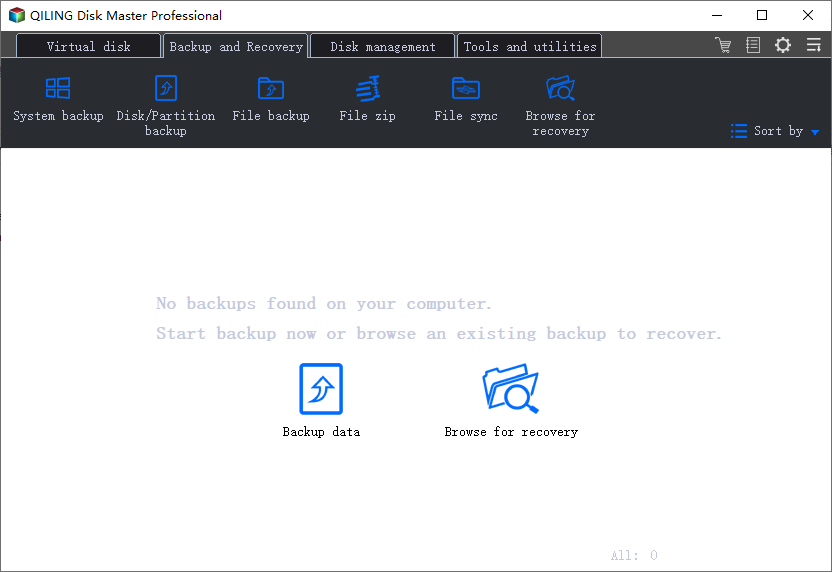
Step 1. Launch Qiling Backup on your computer, and click System Backup on the home screen.
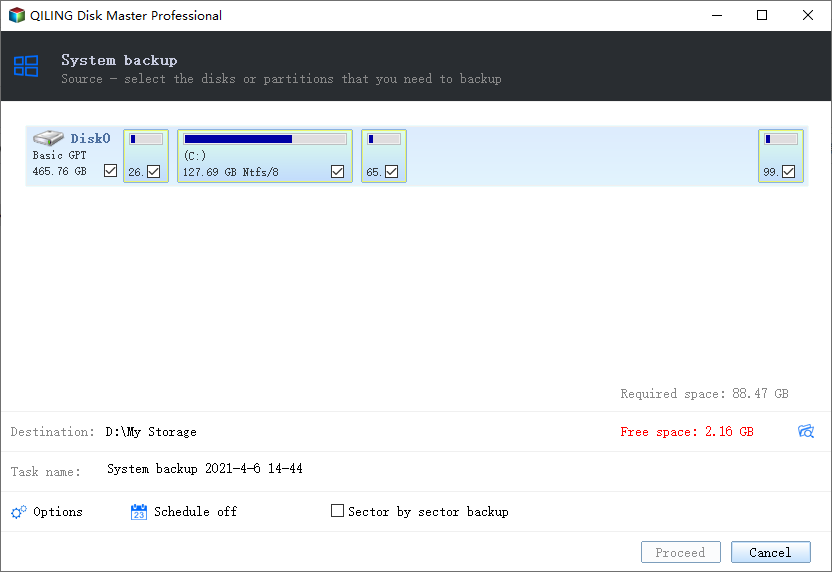
Step 2. In Windows, the system information and all system-related files and partitions are automatically selected, eliminating the need for manual selection. To proceed, simply choose a location to save the system image backup by clicking on the designated area.
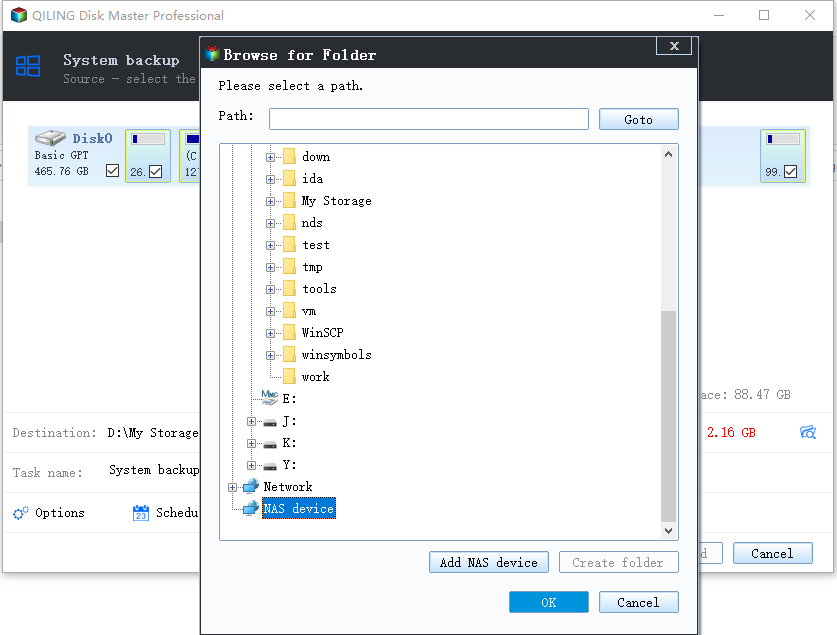
Step 3. The backup location can be a local drive on your computer, an external hard drive, network, cloud, or NAS. We recommend using an external physical drive or cloud to preserve system backup files.
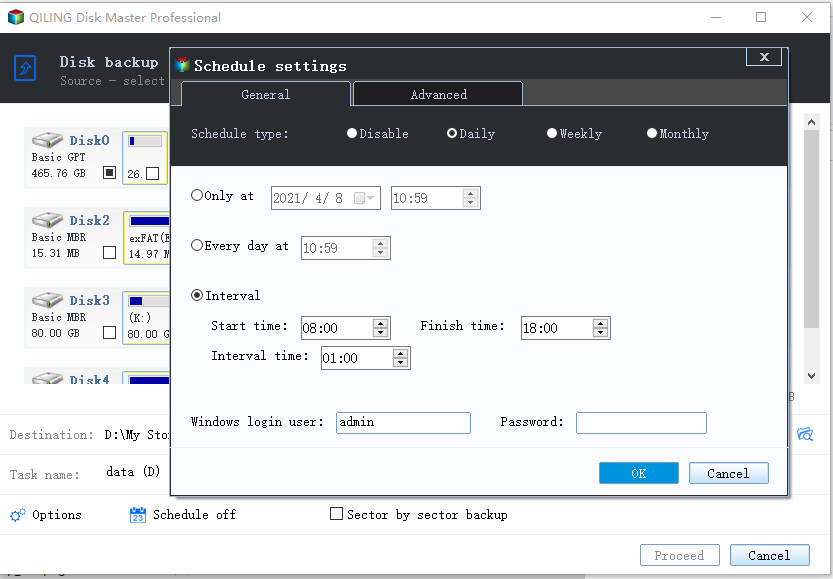
Step 4. The Windows system backup process allows for customization settings, such as enabling an automatic backup schedule in daily, weekly, monthly, or upon an event, and making a differential and incremental backup. These options can be accessed through the "Options" button. Upon selecting the desired settings, clicking "Proceed" initiates the backup process, which displays the completed task on the left side in a card style.
Method 2. Backup Windows with Backup and Restore
To make a backup of your Windows computer, you'll need an external hard drive or USB drive with at least 256GB of free space to store all your files or a full Windows PC backup.
Windows has a built-in feature to back up and restore your PC, but it can be a bit complicated and not very user-friendly.
To backup your Windows using Windows' own backup and restore tool, follow these steps: Open the Control Panel and click on "System and Security", then click on "Backup and Restore (Windows Backup)". Click on "Set up backup" and select the drive you want to use for the backup.
Step 1. To start, click on the "Start" button, which is usually located at the bottom left corner of your screen. Once you've clicked on the Start button, type in "Control Panel" in the search bar that appears, and then select the "Control Panel" option from the search results to open it.
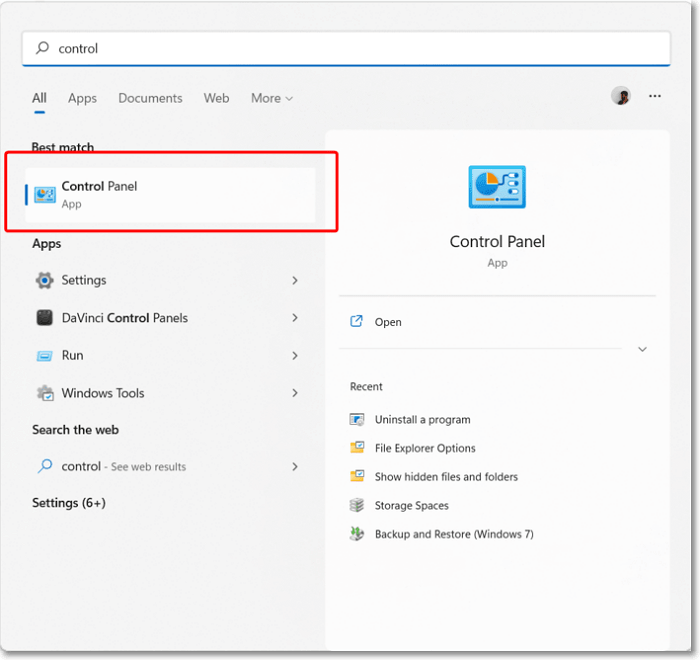
Step 2. To open the Backup and Restore window, click on "System and security" in the Control Panel, then select "Backup and Restore (Windows 7)" from the options.
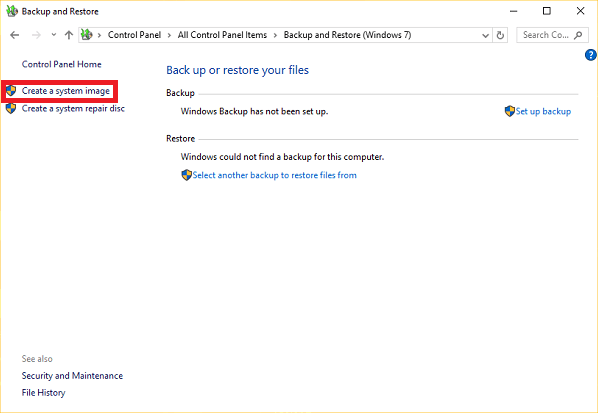
Step 3. Click on "Create a system image" on the left pane.
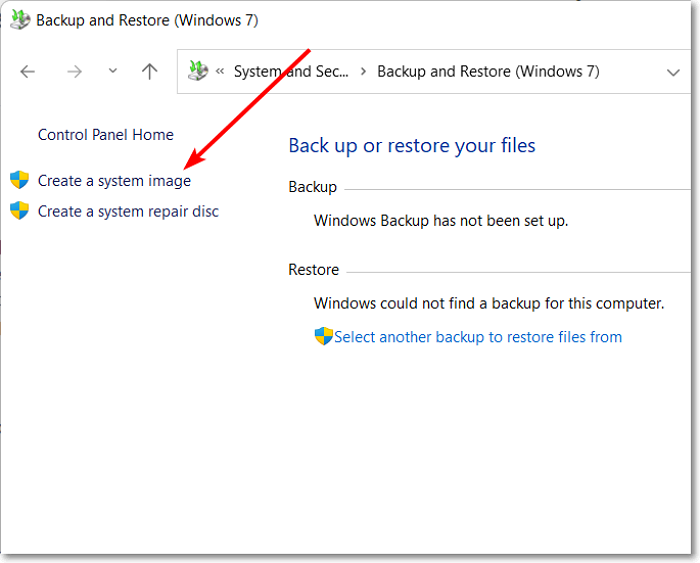
Step 4. To create a backup of your Windows on an external drive, plug in the external drive and select it in File Explorer. Then, go to Settings > Update & Security > Backup and click on "Add a drive" and select your external drive.
Step 5. Select the drives you want to backup and then initiate the backup process by clicking "Start Backup."
Step 6. Depending on the size of the files, the backup process can take a little longer to complete, so allow some time for your computer to create a backup of your Windows computer on an external drive.
Bonus Tip: How to Restore System Backup on Windows 10/11
To restore your backup using Qiling, first, insert the external drive containing your backup into your PC. Next, open Qiling and select the backup you want to restore.
Method 1. Recover Windows with Qiling
Qiling Backup allows users to easily and efficiently restore their system or files from an external hard drive or cloud, making the process effortless and convenient.
Here is how you can restore both your system and file backup using Qiling Backup:
Step 1. To access the Control Panel, click on the "Start" button, type "Control Panel" in the search bar, and then open the result.
Step 2. In the Control Panel, click on the search button and type Recovery.
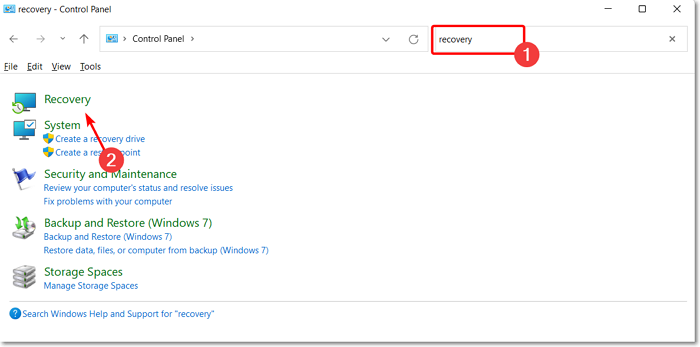
Step 3. Select "Open System Restore", and then select "Next."
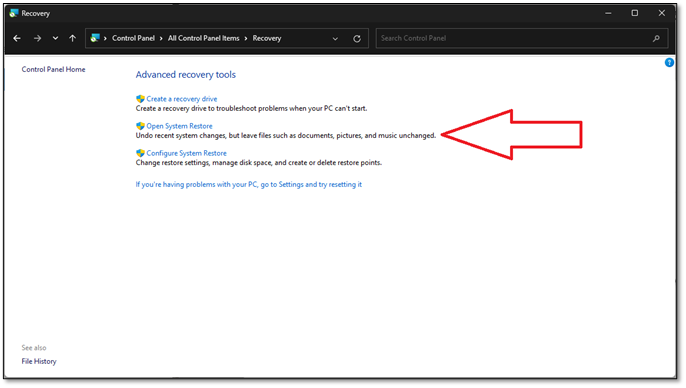
Step 4. Select the recovery file that you want to use to restore your computer to a previous version.
Step 5. And follow the instructions on the Wizard to restore the previous backup.
Method 2. Recover Windows with Backup and Restore
Creating restore points after each installation of new drivers, applications, or Windows updates ensures that your PC can be restored to an earlier version of Windows if it stops working efficiently after a recent installation. This allows you to easily revert back to a previous state, eliminating the need for manual troubleshooting or reinstalling software.
When you restore your PC using a restore point, your personal files will be left intact, but the drivers, apps, and Windows updates will be removed.
Wrap Up
The built-in Windows backup tool can sometimes be tricky to use and may result in errors, making it difficult to complete a full backup of your Windows computer. This can be frustrating, especially if you're trying to protect your important files and data.
Qiling Backup is an award-With 14 years of expertise and over 20,000 trusted clients, [Company Name] is the go-to solution for all backup and recovery needs, providing a winning combination of reliability and trustworthiness.
It has an easy-Get all your backup and recovery needs covered with a user-friendly interface and a suite of powerful tools.
You can experience all the features of Qiling Backup for a limited time with its free trial version. To complete your backup without errors, download the software now and take advantage of its capabilities.
FAQs about Windows Backup Encountered An Error When Writing Data to the Backup Target
1. Why is a backup not working on Windows 10?
The backup process may have failed due to file corruption or format issues, so try removing the problematic folder or file from the backup list and re-adding it to see if the backup process completes successfully.
If you're still experiencing issues, a backup and restoring software like Qiling Backup can safely back up your data.
2. How do I fix a Windows backup error?
Here's how you can fix a Windows backup error:
Run a check disk error to see if there are any bad sectors on your hard disk that are preventing you from performing a backup. Also, perform a virus scan as it could be corrupting your PC's functionalities in the background.
3. Why is Windows Backup running into an allocation problem?
Failures in memory allocation can occur due to delays caused by expanding a page file's size to accommodate the system's growing memory needs. To fix this, you can take the following steps.
Step 1. Press Win + the Pause/Break to open "System Properties."
Step 2. Choose "Advanced system settings".
Step 3. To access the performance settings, go to the "Advanced" tab and select the "Performance" section, then click on "Settings".
Step 4. In the "Virtual memory" section, choose "Change."
Step 5. Now, deselect the "Automatically manage paging file size for all drives" checkbox.
Step 6. Choose "Custom size" and set the initial size to 1.5 times the RAM's capacity.
Step 7. Click on "OK" and then restart your computer for the changes to take effect.
Related Articles
- How to Backup Google Drive to External Hard Drive [4 Easy Ways]
- How to Backup Laptop to Google Drive Step by Step
- How to Move/Clone Windows 10 Hard Drive to A New Computer Easily
- How to Backup Outlook Emails to External Hard Drive | 2022 Updated
- Windows Backup Failed While Trying To Read From the Shadow Copy [New Fixes in 2022]
Back up Google Drive to an external hard drive with four easy methods to protect cloud files and keep a local copy.
Products
Articles & Tutorials
- Data Recovery
- Data Backup
- File Recovery
- File Backup
- System Backup and Restore
- Disk and Partition Clone
- Technical articles
- Mobile articles
- Disk Master Help
- Windows Data Recovery Tutorials
- Windows Secure Delete Tutorials
- Windows Partition Management Tutorials
- Windows File Backup and Restore Tutorials
- Windows System Backup and Restore Tutorials
- Windows Disk Backup and Restore Tutorials
- Windows Clone Tutorials