What is Disk Imaging
Disk imaging is the process of copying the contents of a data storage device or medium and transferring it to another similar medium or device, creating an exact duplicate of a computer's hard disk drive, including programs, setup, and data, which is then stored in a compressed file format.
Disk imaging creates an exact replica of a computer's systems and data, allowing for recovery in case of a catastrophic disk crash, or to clone a system setup for installation in another computer or hard drive.
The Uses of Disk Imaging
Disk imaging software is primarily used to provide quick and easy back-ups of computer software and data stored on hard disks. Unlike traditional data backups, disk imaging programs back up not only data but also the computer's systems and configuration, making them a convenient option for protecting a computer's entire setup.
A disk imaging program captures an image of an active computer system, including its structure, registry, programs, tweaks, software, and more. This is useful for troubleshooting problems, recovering from deliberate virus attacks, software or hardware glitches, or recovering from catastrophic incidents like fires or floods.
A disk image is essentially a snapshot of a system at a specific point in time, allowing for easy reinstallation to that exact state, eliminating the need for reinstalling software and resetting settings to the desired configuration.
Disk imaging software can be used by systems administrators to quickly duplicate systems on multiple computers with similar configurations, saving time and effort in transferring and configuring systems.
To back up Windows 10 or the entire computer to a USB drive, you can use the built-in Windows Backup feature, third-party backup software, or a USB drive with a bootable operating system like Windows To Go. The Windows Backup feature allows you to back up your files, system, and applications, while third-party software offers more advanced features like disk imaging and compression. A USB drive with Windows To Go can also be used to create a portable copy of your Windows 10 installation, allowing you to boot from the USB drive and access your backed-up system.
Disk Image Software
Symantec Ghost, a popular disk imaging software, allows users to duplicate or clone entire disks, as well as individual partitions, and provides options for copying data to another disk, network, or tape drive.
A corporate edition of Ghost allows for multicasting, enabling the simultaneous transfer of images from one computer to several, reducing network stress when transferring large files.
Best Disk Image Software - Qiling Backup
Qiling Backup is a reliable software that provides safe backup and recovery solutions, including backup, disk cloning, and disaster recovery, with the ability to back up systems, files, and applications with just one click.
Step 1. Launch and run Qiling Backup on your Windows 10 PC and choose "System backup".
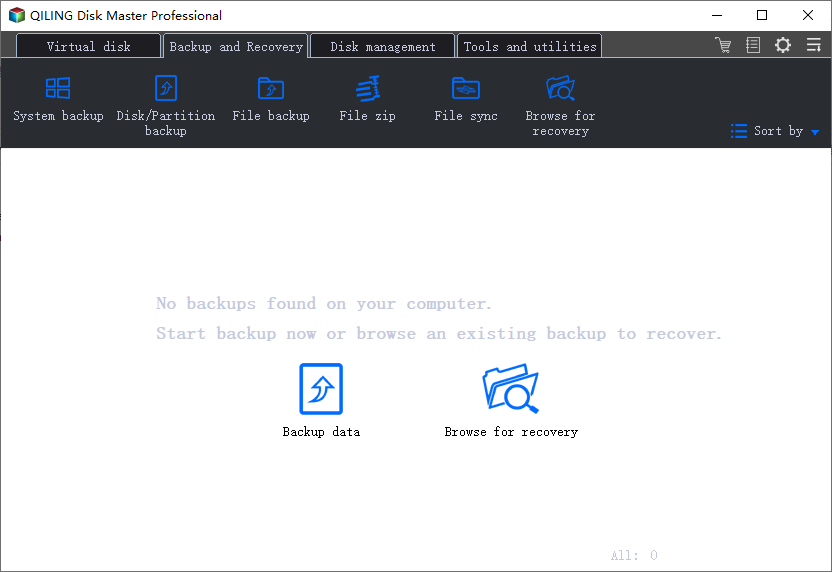
Step 2. Select the external hard drive or USB as the destination for saving the Windows 10 system image by clicking the browse icon.
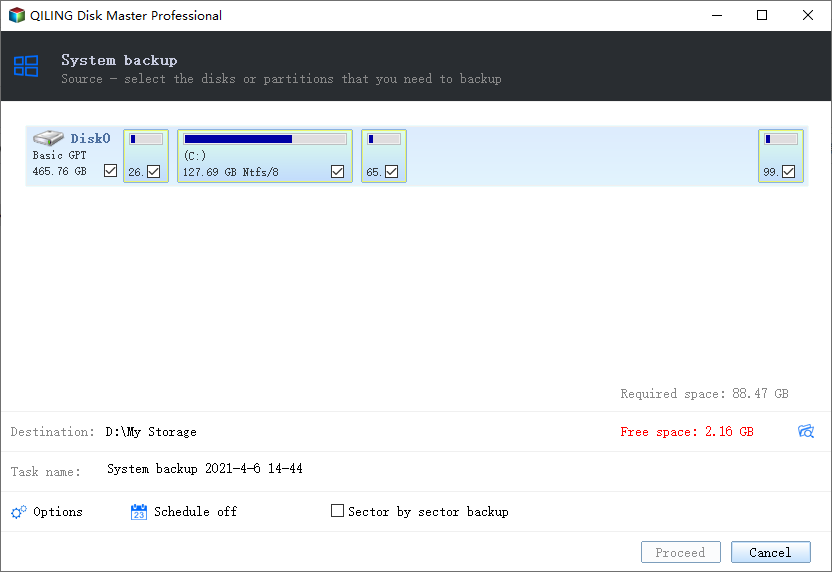
Step 3. Click Proceed to start backing up your Windows 10 system now.
Related Articles
- Create System Image on USB Drive in Windows 10/8/7
- [Solved] This Application Was Unable to Start Correctly (Error Code: 0xc000007b)
- Hard Disk Backup in Windows 10/8/7 [Beginners' Guide]
- Why Is OneDrive Not Syncing on Windows PC? Answers and Fixes Are Here!
- How to Create a NAS to NAS Backup for Synology/QNAP/Buffalo [2022 Tips]
There are two ways to create a NAS to NAS backup: using a manufacturer's appliance or running a NAS backup and recovery software. Qiling Backup is a tool that allows for a NAS to NAS backup with a few clicks, making it easy to back up your NAS data. - Windows OS Migration Software: Migrate OS to New Hard Drive
This page introduces the best OS migration software and guides you through the process of transferring your system to a new hard drive or SSD without data loss, compatible with Windows 11/10/8/7/XP/Vista.
Products
Articles & Tutorials
- Data Recovery
- Data Backup
- File Recovery
- File Backup
- System Backup and Restore
- Disk and Partition Clone
- Technical articles
- Mobile articles
- Disk Master Help
- Windows Data Recovery Tutorials
- Windows Secure Delete Tutorials
- Windows Partition Management Tutorials
- Windows File Backup and Restore Tutorials
- Windows System Backup and Restore Tutorials
- Windows Disk Backup and Restore Tutorials
- Windows Clone Tutorials