Cloud Download or Local Reinstall Windows 11/10? Check Differences
Quick Navigation:
- 1. Cloud Download vs. Local Reinstall: What's Different
- 2. What's Cloud Download? Pros & Cons
- 3. What's Local Reinstall? Pros & Cons
- 4. Should You Use Cloud Download or Local Reinstall on Windows 11/10
- 5. Back up Your Data before Resetting Windows 11 or Windows 10
- 6. Switch between Cloud Download and Local Reinstall
When your PC or laptop starts malfunctioning, you can reset it to get rid of such an issue, and for Windows 10/11, you have two options: cloud download and local reinstall.
Windows OS offers two main options for reinstalling the operating system: "Keep personal files and apps" and "Remove everything". While both options ultimately result in reinstalling Windows, they differ in their approach to preserving user data and applications. The article will explore the differences between these two options and provide guidance on when to choose each one.
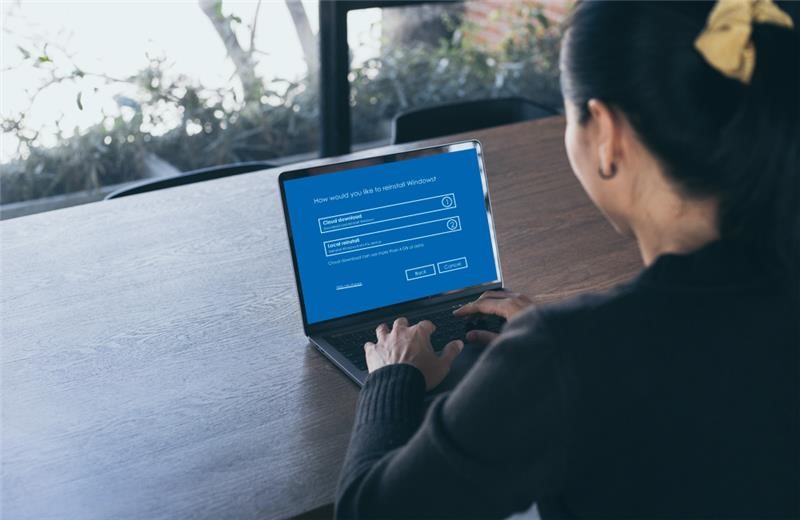
Cloud Download vs. Local Reinstall: What's Different
The two options for reinstalling Windows are local reinstall, which uses saved system files on your PC, or cloud download, which is best for those with a good internet connection.
There are no major shortcomings between the two methods, but some users may prefer one over the other due to certain drawbacks. Each method has its own advantages and disadvantages, with some users opting for one based on their specific needs.

What's Cloud Download? Pros & Cons
Cloud Download is a cloud-based file storage and sharing service that allows users to securely store and share files across devices, with features like real-time syncing, automatic backups, and password protection to ensure files are always safe and accessible.
Pros:
Cloud download allows you to save time and space on your computer by accessing files and programs online, as long as you have an internet connection. This flexibility enables you to download whatever you need, whenever you want, without having to physically store it on your device.
You get access to all your data, including saved passwords, etc.
Cons:
The main drawback of using the cloud download option is that a reliable internet connection is required, which may not be feasible in areas with poor internet coverage.
Some people find the process of downloading items from the cloud to be confusing or difficult to understand.

What's Local Reinstall? Pros & Cons
Local Reinstall is a feature that allows users to reinstall Windows on their computer without needing to download and install the operating system from scratch, making it a convenient option for troubleshooting or starting fresh.
To use Local Reinstall, you'll first need to create a Windows installation backup using the built-in Backup and Restore tool or a third-party software like Qiling Backup Free, and then proceed with the Local Reinstall process.
Pros:
When you reinstall Windows, it replaces all of the old files and settings, which can help fix many common problems with your computer.
A local reinstall preserves customizations and programs, keeping them on your computer after the reinstallation is complete.
Cons:
If you choose the local reinstall option without a backup of your data, you risk losing important files during the process.
If you encounter any problems during the reinstallation process, you may end up with a system that is difficult to repair.
Should You Use Cloud Download or Local Reinstall on Windows 11/10
When using Windows 11/10, the process of reinstalling or downloading software differs slightly between Cloud Download and Local Reinstall. While both methods allow for the installation of software, they have distinct approaches and implications.
Cloud Download allows you to keep your programs and files after reinstalling, whereas Local Reinstall does not.
Cloud Download requires an internet connection, whereas Local Reinstall does not. This means that when reinstalling Windows locally, you have a complete copy of the OS and all data on your hard drive, eliminating the need for an internet connection.
If something goes wrong with your computer, you can simply reinstall Windows and start over from scratch.
A local reinstall of Windows allows for customization, such as choosing which programs and features to install, and organizing files and data, which is not possible with a cloud download.
A local reinstall is typically faster and more reliable than a cloud download, as it doesn't rely on internet speeds or bandwidth limitations, instead using files from your hard drive.
Overall, using Local Reinstall is generally the better option for installing Windows on your computer, as it is faster, more reliable, and allows for customization, compared to Cloud Download.
Cloud backup and local backup are two different methods of backing up data. Cloud backup stores data on remote servers, accessible through the internet, while local backup stores data on a physical device, such as an external hard drive or USB drive. Both methods have their advantages and disadvantages. Cloud backup is convenient and accessible from anywhere, but may be vulnerable to hacking and internet connectivity issues. Local backup is more secure and doesn't rely on internet connectivity, but may be lost if the physical device is damaged or stolen.
The debate between cloud backup and local backup has been ongoing, leaving many wondering which option is best for them. If you're struggling to decide, don't worry - we're here to help you make a decision.

Back up Your Data before Resetting Windows 11 or Windows 10

Whenever we talk about resetting Windows or reinstalling Windows, data backup is something that comes to mind.
Before reinstalling, it's crucial to save your data. Qiling Backup Free is a free tool that allows you to back up your important files, making it easy and accessible even for novices to protect any type of data.
Back-Up Your Files
Qiling Backup allows users to back up various file formats, including all types of files.
System Back-Up
You can also back up the whole system data to a safe place.
Disk Back Up
Back up any HDD or SDD with Qiling Backup.
Restore Data in No Time
Qiling Backup allows for the quick restoration of all backed-up data, regardless of the type of data that was backed up.
Qiling Backup is an award-Download Qiling Backup today and discover a winning backup tool that has helped thousands of users protect their data.
Here's a step-by-step tutorial for you to learn how to back up data with this efficient software.
Step 1. To initiate a backup, click the "File backup" option on the "Backup and recovery" page to back up your files.
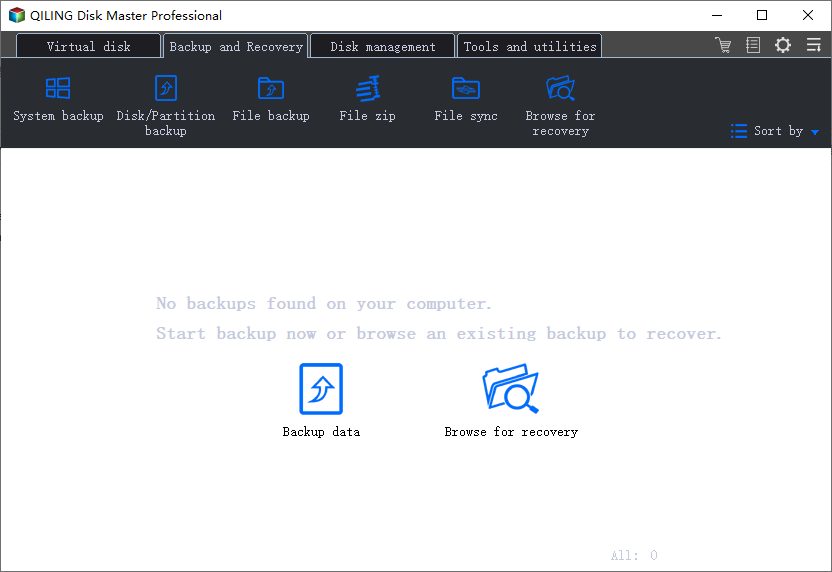
Step 2. On the list view, both local and network files are shown, and you can expand the directory to select backup files.
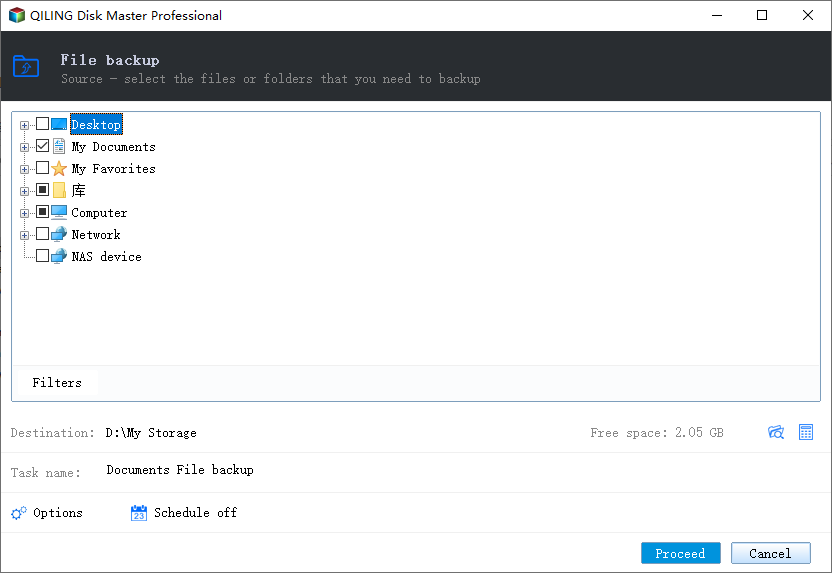
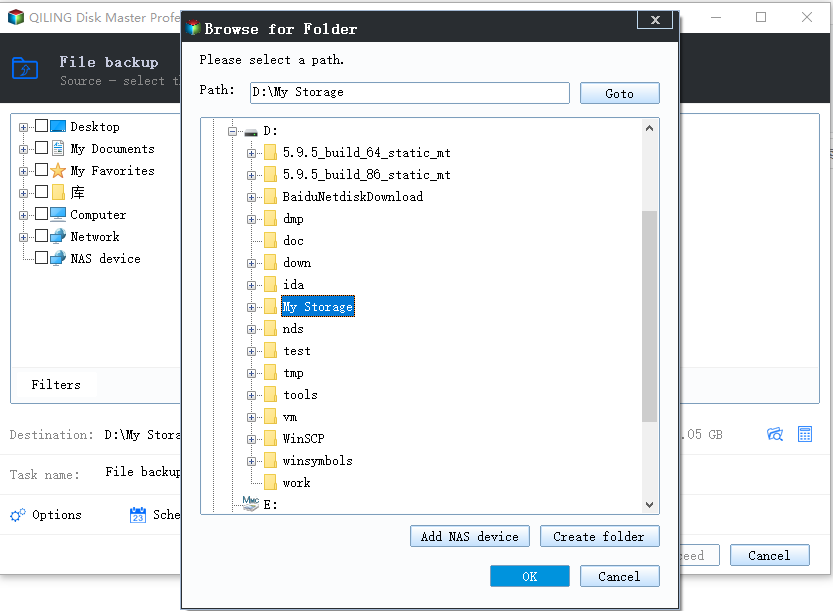
Step 3. Choose a location to store the backup, following the on-screen instructions.
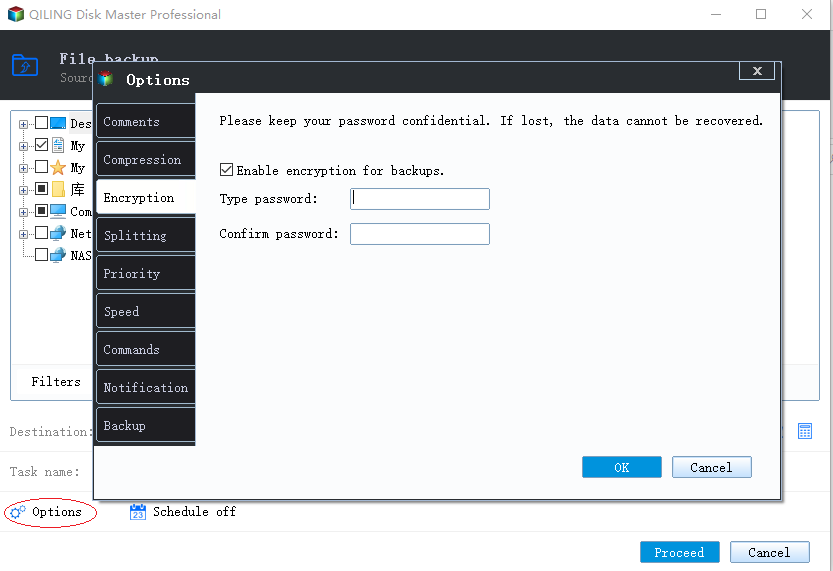
Step 4. To encrypt the backup with a password, click on the "Options" button in the "Backup Options" section, allowing you to customize the backup process according to your needs.
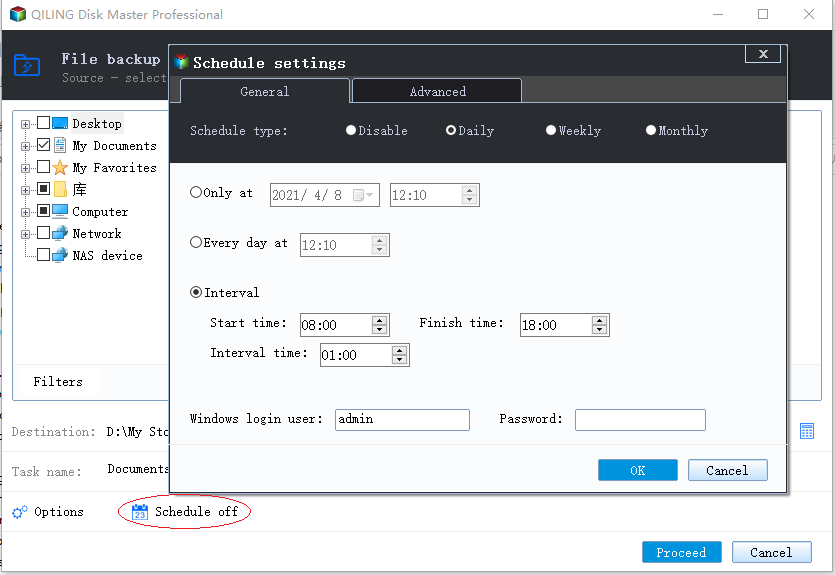
To specify the backup schedule, click on Backup Scheme and select the desired frequency, such as daily, weekly, or monthly, and the start time. You can also choose to start the backup at a specific event, like a system shutdown or a user login.
Step 5. The backup may be stored on a local disk, Qiling's online service, or NAS.
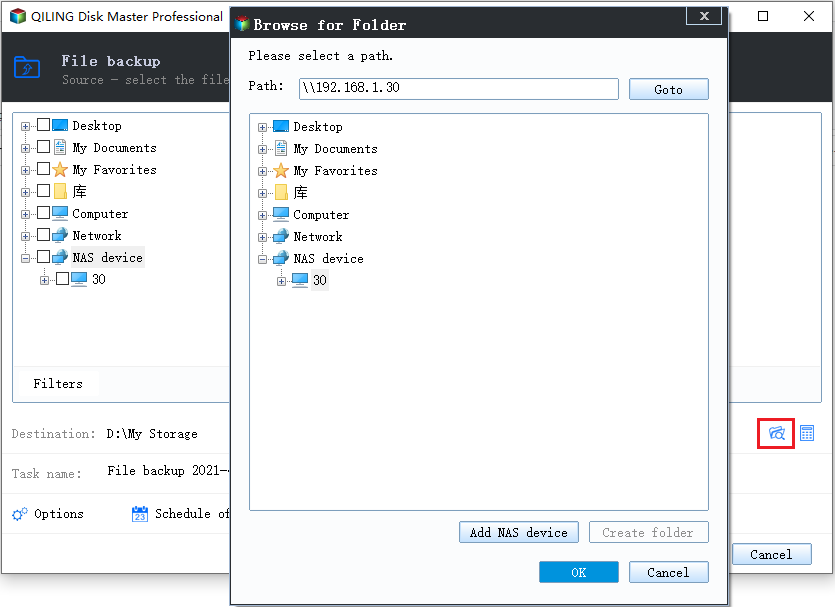
Step 6. Qiling Backup allows customers to back up their data to both a third-party cloud drive and Qiling's own cloud drive.
To back up data to a cloud drive, select Local Drive, scroll down to add Cloud Device, and add your account to log in.
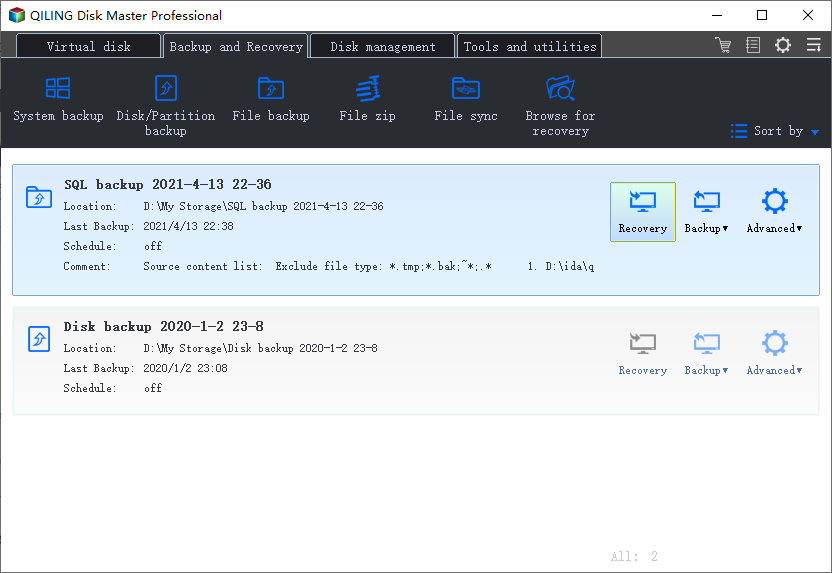
Step 7. To initiate the backup process, click the Proceed button. Once the backup is complete, it will be displayed as a card on the left side of the panel. You can then right-click on the backup job to manage it further.
Switch between Cloud Download and Local Reinstall if Reset This PC is Not Working on Windows 11 or Windows 10
If you're experiencing issues with reinstalling Windows 11 or 10, a common error to look out for is "Rest this PC not working." However, you can bypass this problem by opting for the cloud download option instead of using the local reinstall option. This can help resolve the issue and get your Windows installation back on track.
If you're experiencing issues with reinstalling Adobe Photoshop, you can try using the cloud download option or the local reinstall option. If one method doesn't work, you can use the other as an alternative.
Conclusion
Cloud download and local reinstall are two different options for installing software. While both methods have their own advantages and disadvantages, the main difference lies in how the software is accessed and installed. Cloud download allows users to access and install software directly from the cloud, eliminating the need for physical media or local storage, but may require an internet connection.
Cloud download and local reinstall are two different options for reinstalling software. Cloud download can save time and space on your computer, while a local reinstall offers a simple and clean reinstallation experience.
To ensure your data's safety, consider using the Qiling Backup tool, which allows you to securely back up your important files.
Related Articles
- Seagate Backup Plus Software Downloads and Explanation [perfect tips]
- Top 8 Best Enterprise Backup Software in 2022
- How to Backup Windows 10/11 to OneDrive
- Top 3 Qiling Backup Options You Should Know
- How to Backup Quick Access in Windows 10 [ 2022 Update]
The Quick Access location is a feature in Windows 10's File Explorer, and sometimes users want to backup quick access for data security. To resolve this issue, Qiling Backup software can be used, among other solutions. - Top 7 Best Backup Software for Windows 7 64 Bit/32 Bit Recommends [Free & Paid]
Are you looking for the Best Backup Software for Windows 7? How do you back up everything on Windows 7? Let's uncover the top 7 best backup software for Windows 7 64-bit and 32-bit users that are free to download.
Products
Articles & Tutorials
- Data Recovery
- Data Backup
- File Recovery
- File Backup
- System Backup and Restore
- Disk and Partition Clone
- Technical articles
- Mobile articles
- Disk Master Help
- Windows Data Recovery Tutorials
- Windows Secure Delete Tutorials
- Windows Partition Management Tutorials
- Windows File Backup and Restore Tutorials
- Windows System Backup and Restore Tutorials
- Windows Disk Backup and Restore Tutorials
- Windows Clone Tutorials